Hunting for the king of the Amazon in Ecuador
A few days have passed now, and I still look back on our tour deep in the Amazon rainforest in Ecuador with a big smile on my face.At the beginning …

Amazon adventure
The South American Amazon is the most powerful river on earth and is home to around 1,500 species of fish. Many of them are small, but there are also the giants (arapaima), predators (peacock) and rabiates (piranhas) that every angler has on their bucket list. It’s distinctly realistic that you can tick off all three species on one of our fishing trips to the jungle of Ecuador.
Expect hot fights with a guarantee of splashing water and jumping fish!
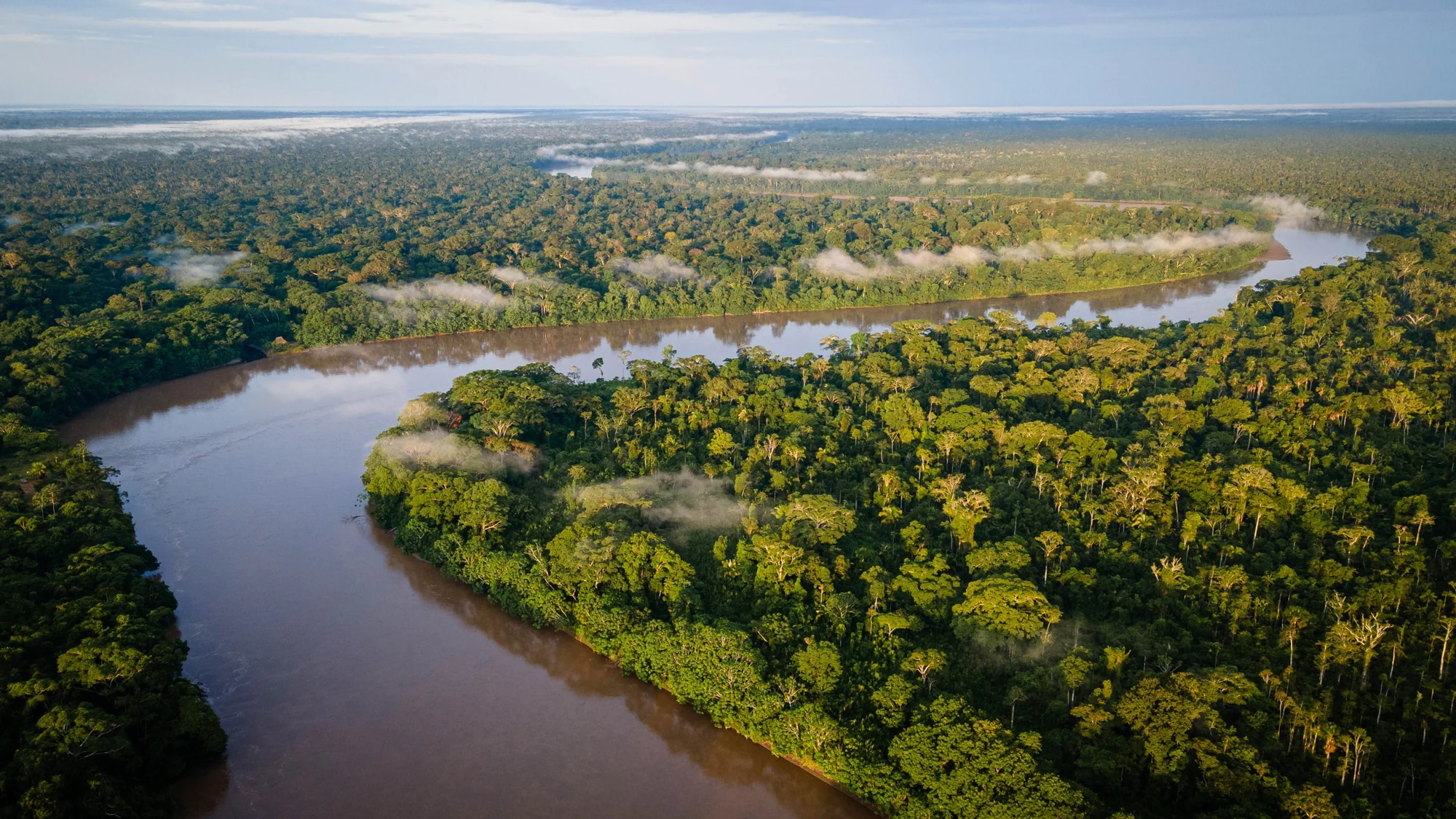
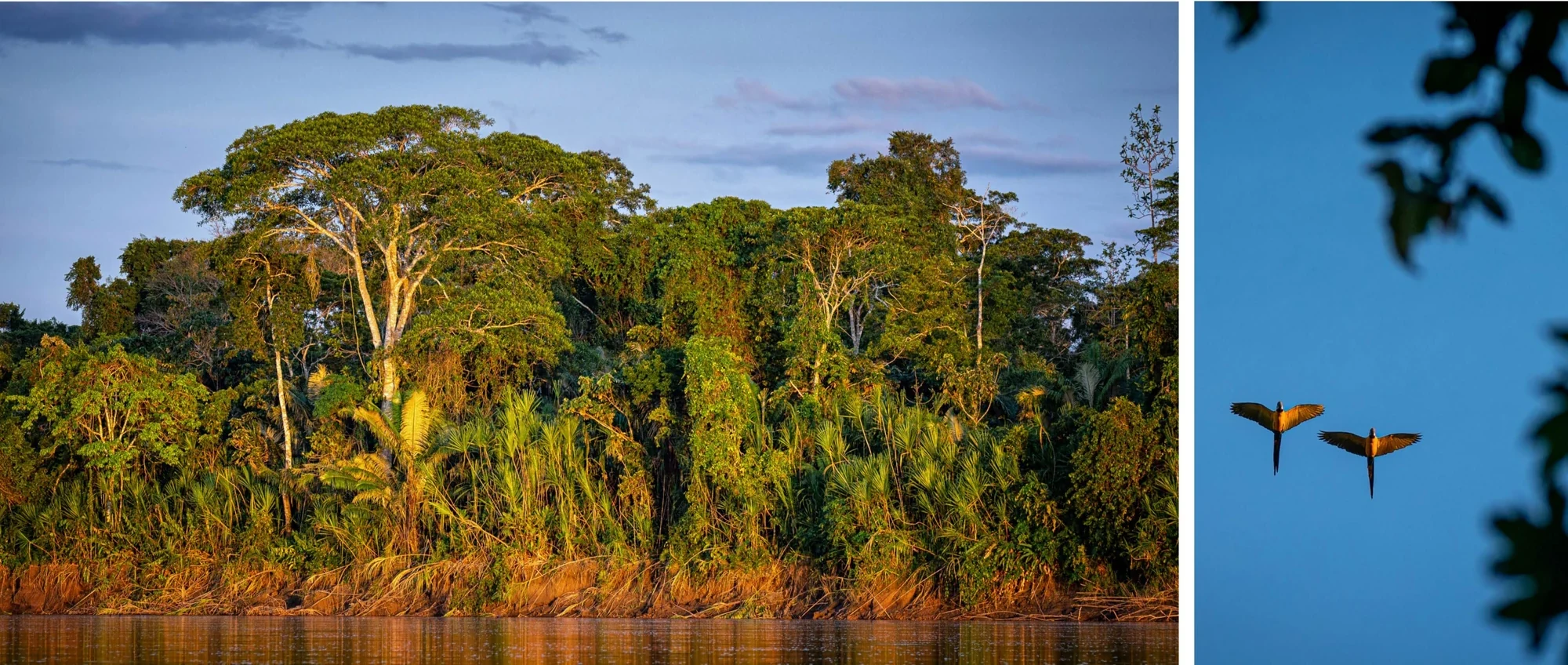
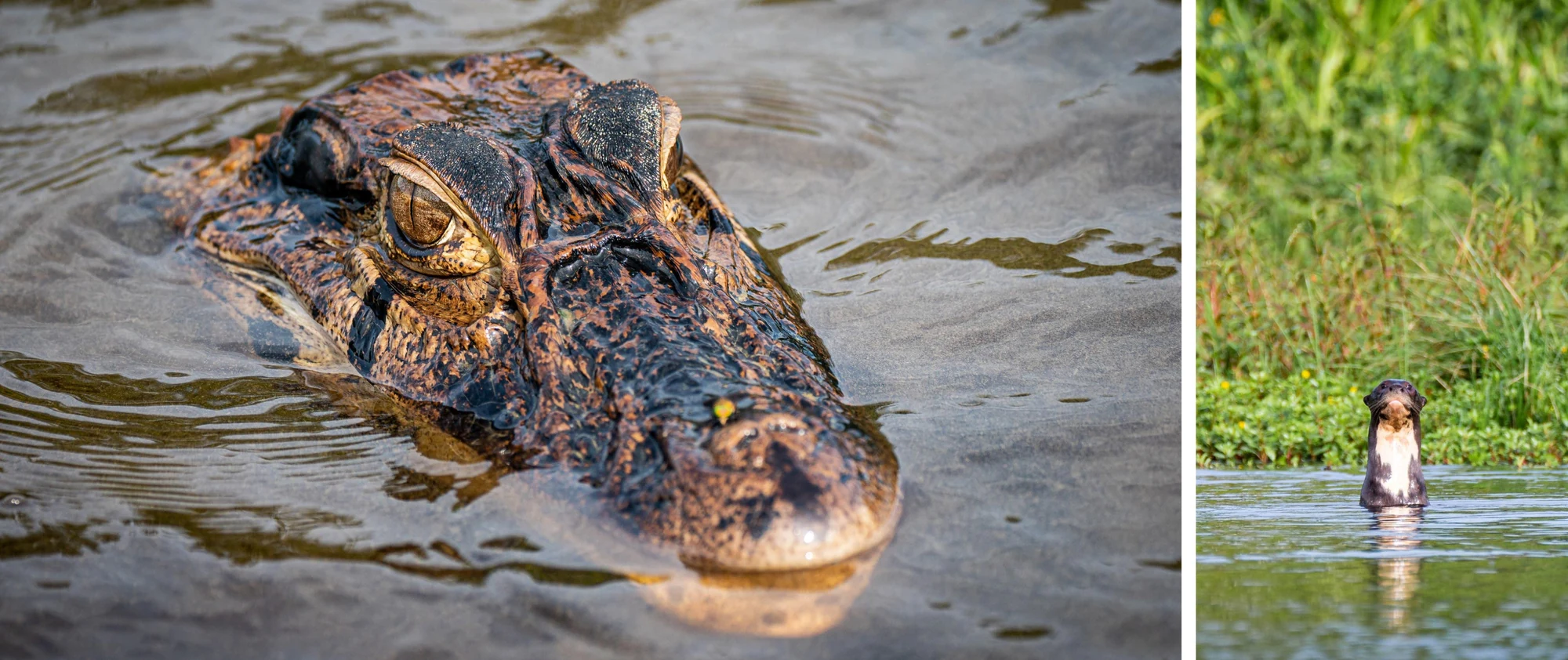
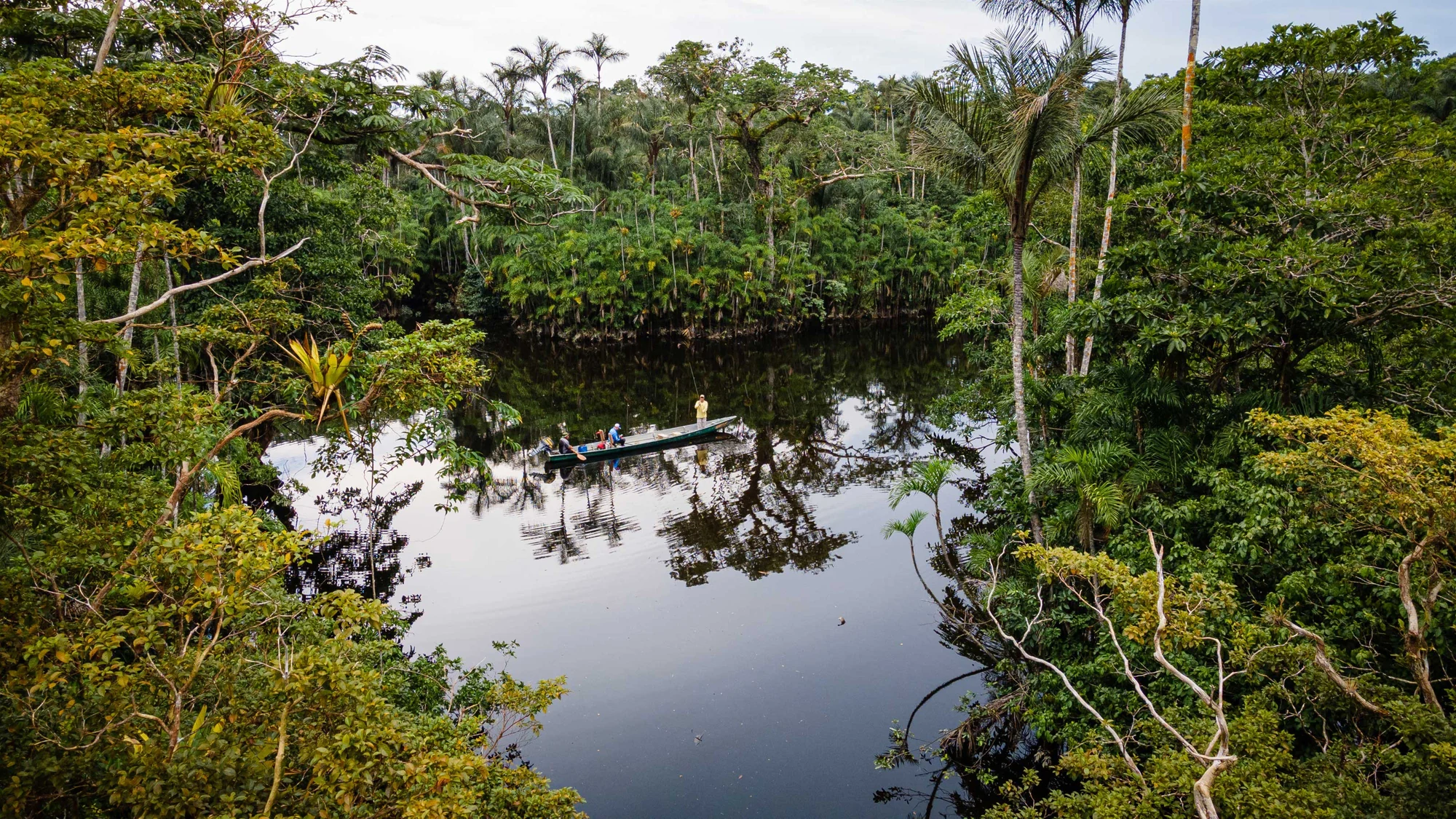
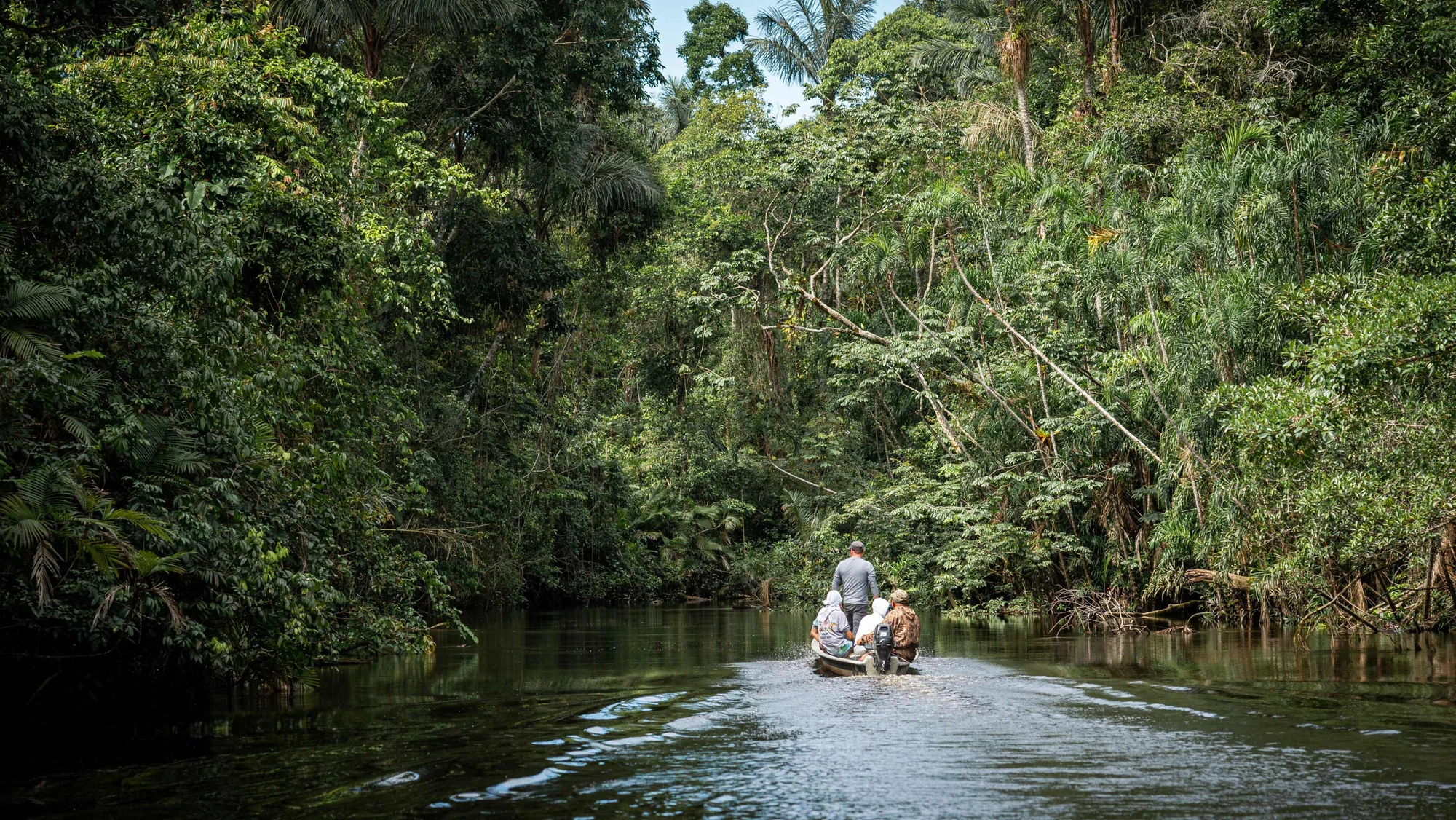
Confucius already knew that the way is the goal. This is especially true for a fishing trip to the almost unfished lagoons and tributaries of our fishing area. After the transatlantic flight and another domestic flight, after a restful night in the hotel, more river kilometres follow, which you cover in a well-motorised canoe. There is hardly any chance of boredom here: Again and again, loudly cawing macaw parrots change sides of the river in the sky, monkey families jump from tree to tree in the riparian vegetation or playful giant otters cavort in the river water.
Our tip: Keep your camera ready!
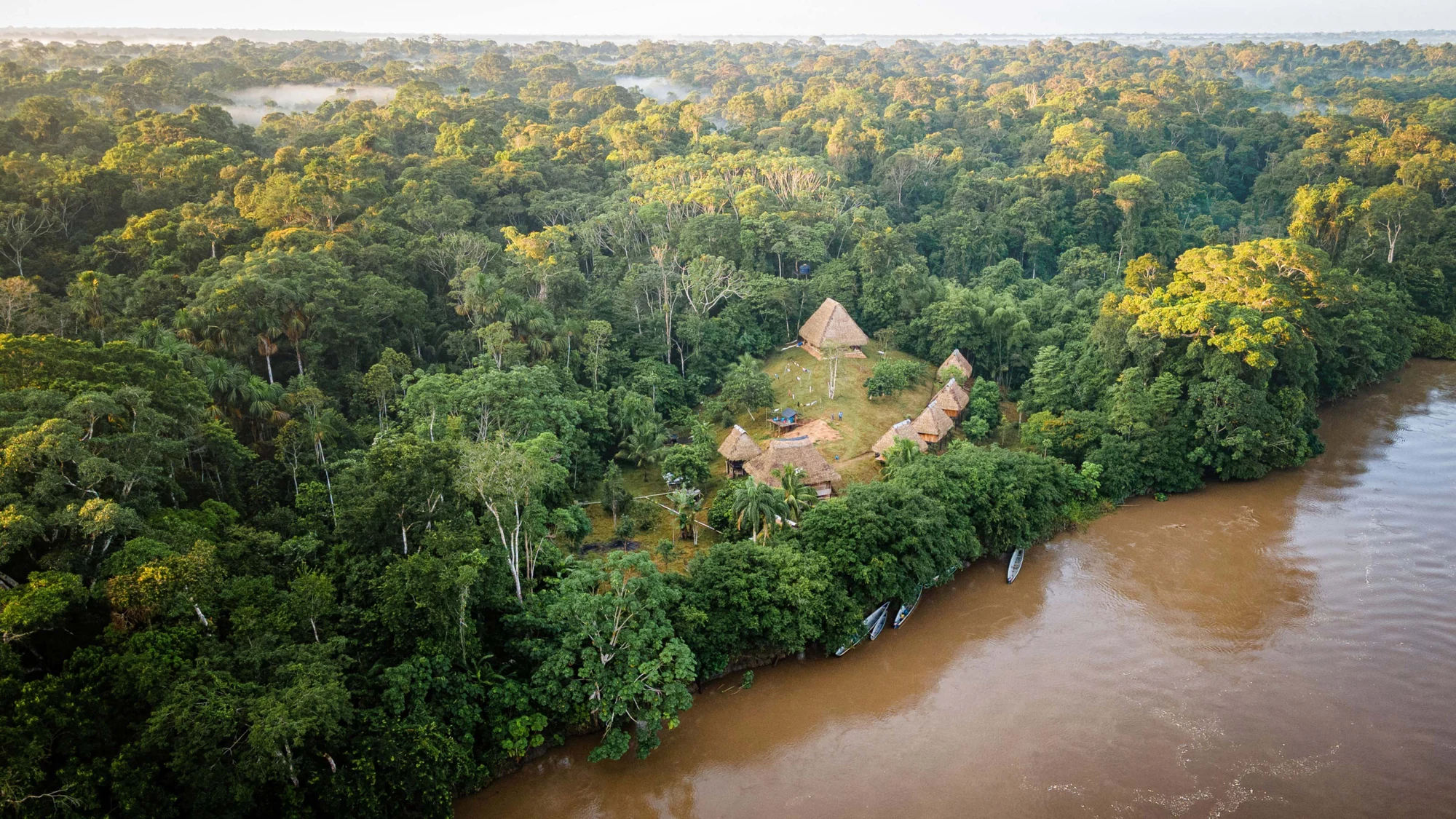
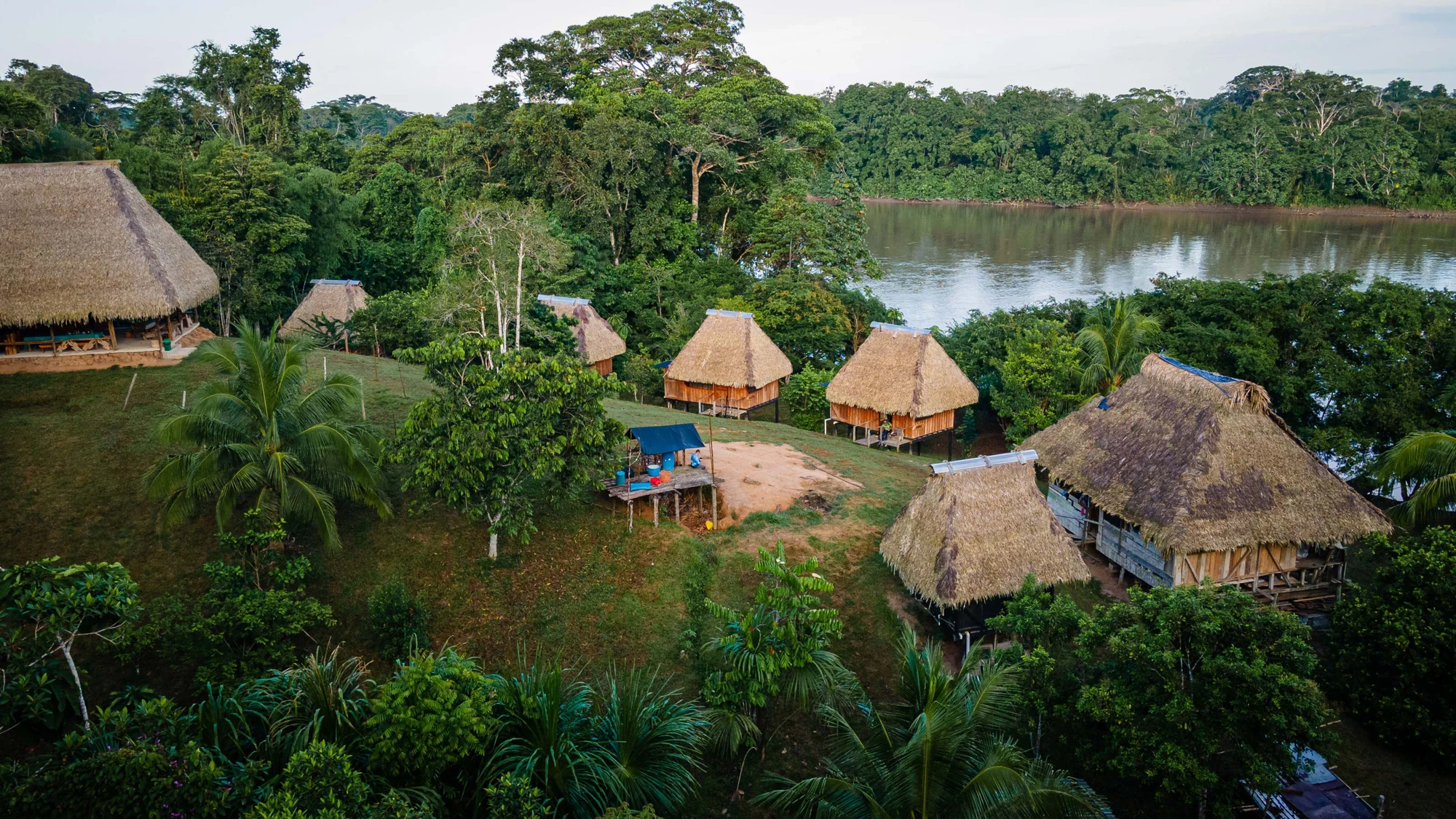
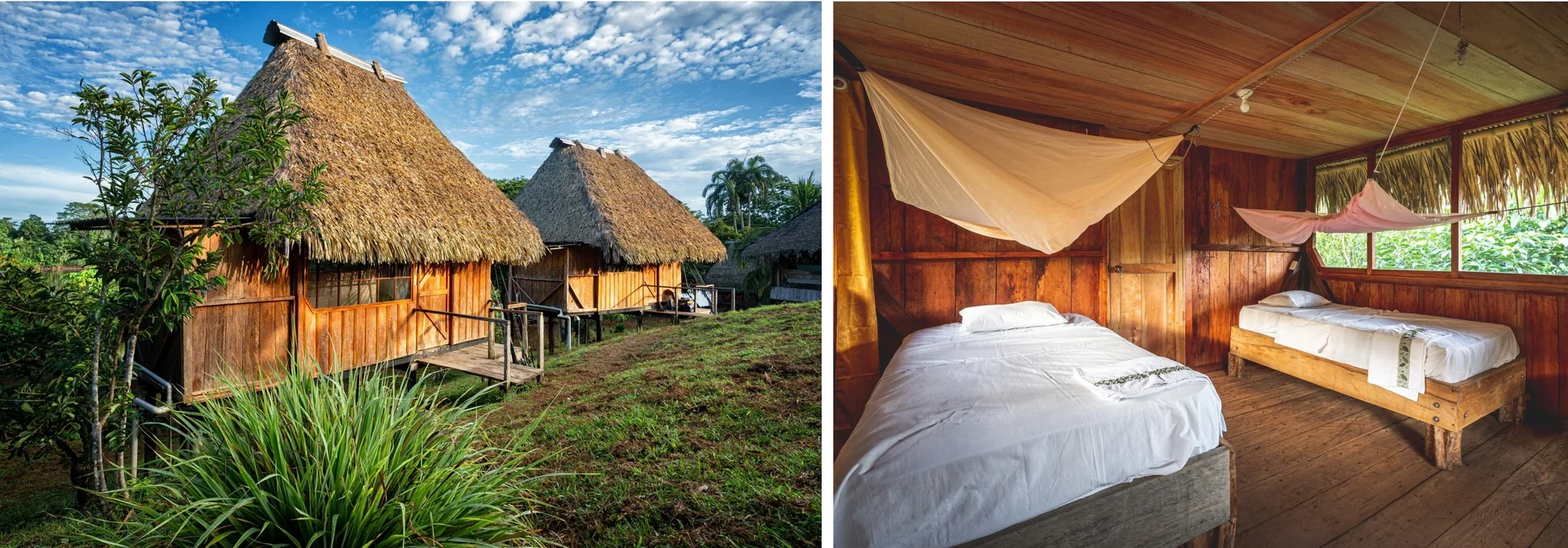
Upon arrival at the base camp, you will first move into your jungle hut (optionally with two or three single beds), which is equipped with its own shower and toilet. All beds have mosquito nets. Apropos: Our local partner reports that so far no malaria disease has occurred among his guests. During our test trip there were none at all during the day and only short phases of mosquito activity in the evenings, against which a Thermacell device helped excellently. Dinner and all other meals are served in an open communal hut.
Afterwards, it is time to prepare the fishing gear for the following days.
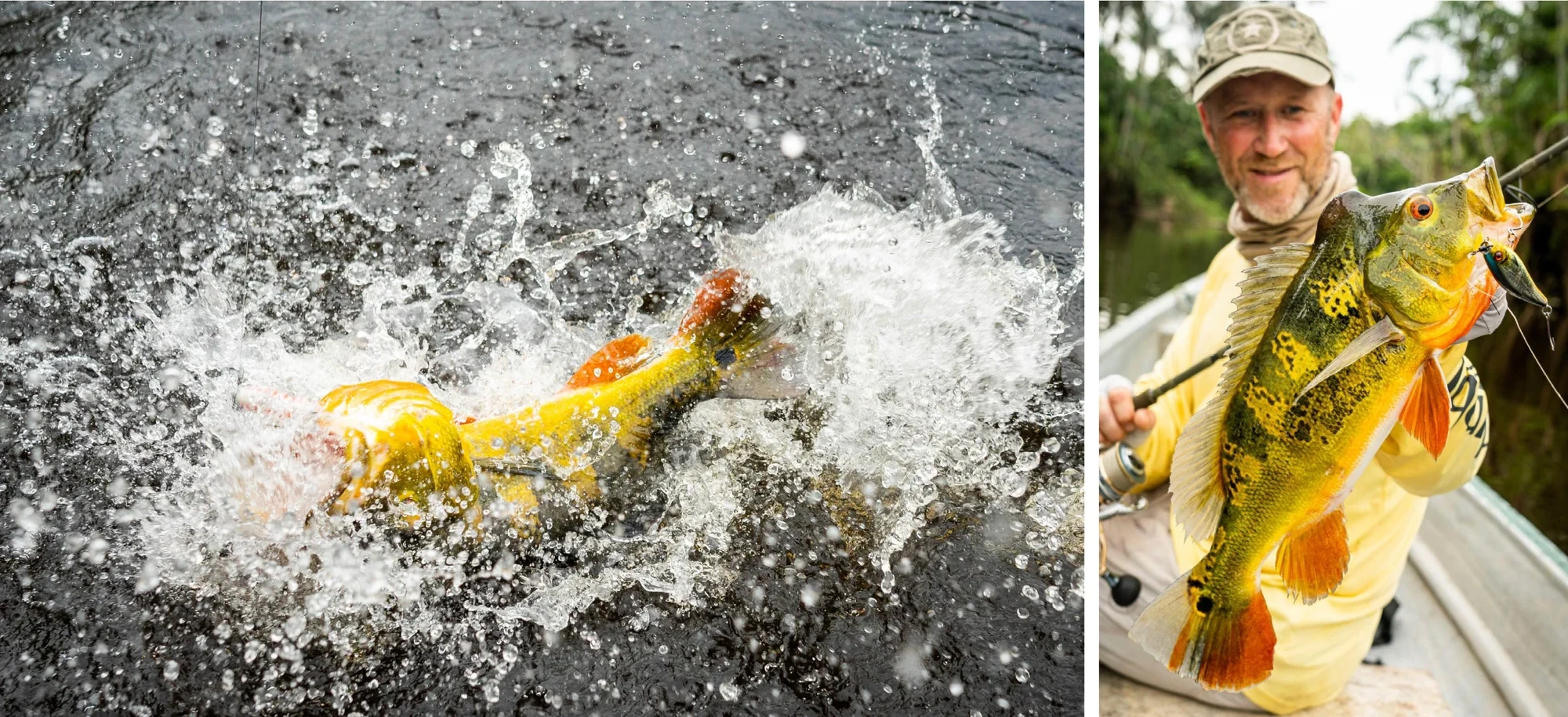
Due to constantly changing water levels and to accommodate the different wishes of the anglers, there is no ready-made schedule. The organisation is kept “breathing” and can be changed and adapted at any time in consultation with our English-speaking partner on site. On our seven-day test trip, we were craving some serious action and initially arranged a day of peacock fishing with artificial lures. Very simple rule: cast your lure where the shore vegetation protrudes as far as possible into the water. “BAAAM!”
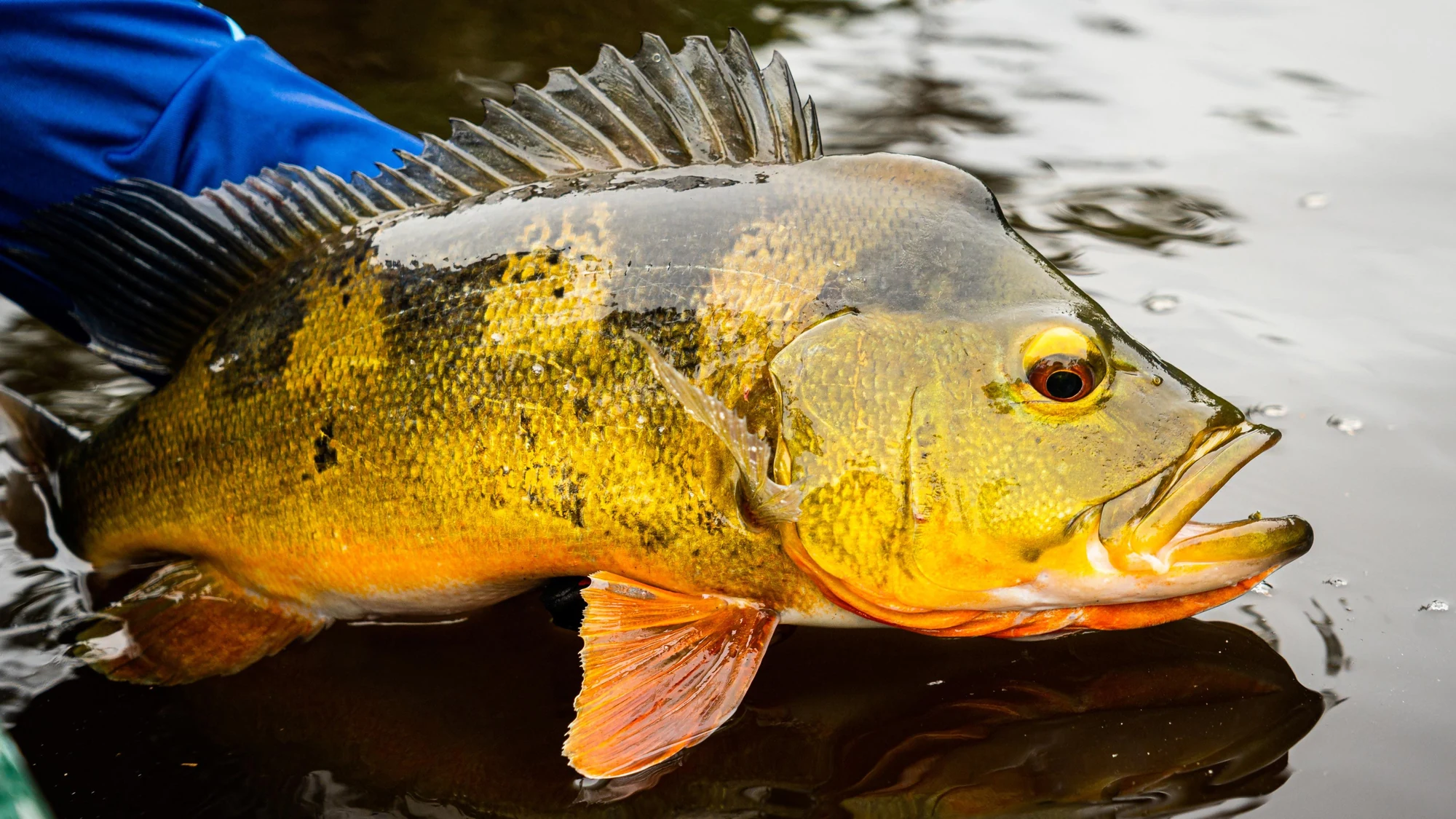
Your first bite close to the edge of the greenery won’t be long in coming. Lures offered just below the water’s surface will produce more fish, while surface lures provoke more spectacular bites with foaming water. There are plenty of Peacocks around to try both! 5 to 15 peacocks per day per angler is considered normal, more are possible at any time. Better fish can be well over 50 centimetres long. And the best thing about it: Peacocks fight like berserkers on light spinning gear, almost always leap out of the water with a somersault in the fight and are a real feast for the eyes in terms of colour.
You just have to love this fishery!
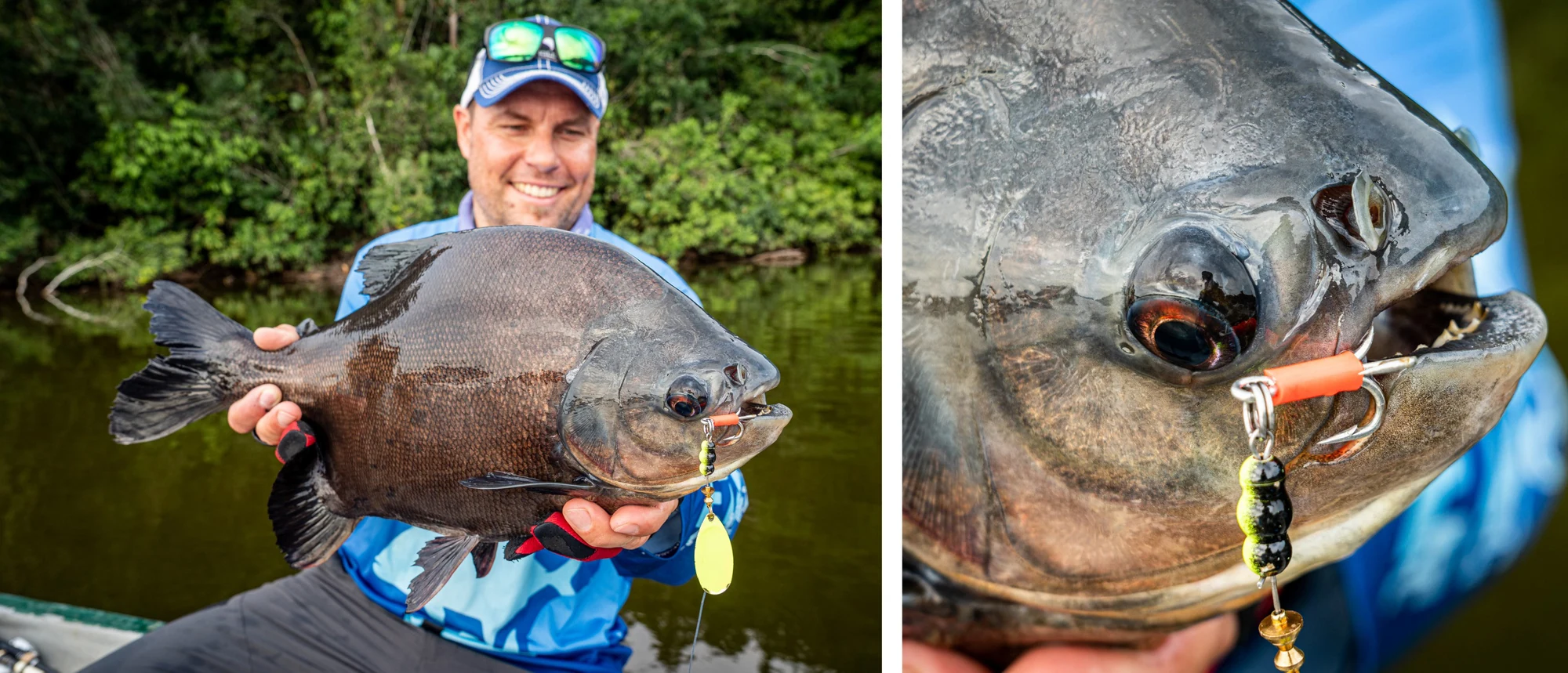
If you’re looking for a little more “pressure” on the line, you should definitely plan a day or two of fishing for Pacu! One or two piranha will certainly have taken an interest in their peacock bait the day before. Pacus are their big brothers and come from the same genus. The big difference: while piranhas have this nasty set of teeth with razor-sharp triangular fangs, the pacu has almost human-like teeth. In addition, pacus are much more peaceful and feed, among other things, on nuts that fall into the water, which they can easily crack with their teeth.
Remember: You should never stick your finger in the mouth of a pacu or a piranha! Ouch!
Now it gets even more interesting from an angler’s point of view: Pacus can reach weights of up to 30 kilos! Let’s stay realistic: a ten-kilo specimen is already a serious opponent and a very good fish. Pacus are incredibly strong fighters and search for the undergrowth immediately after the bite. For better or worse, the only thing that helps here is to CONTINUE! Oh, a pike rod is completely undersized for this fishery. The fight takes place in a very confined space and you have to impose your will on the fish without compromise – otherwise you will only emerge as the second winner from the fierce battle.
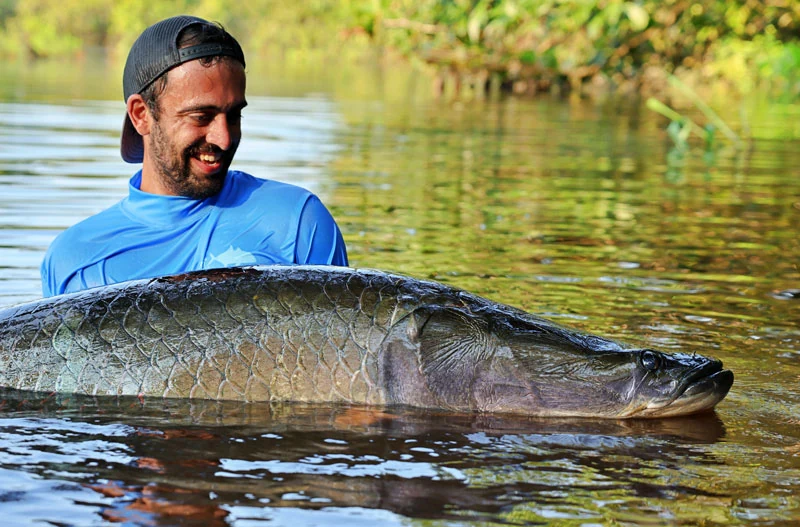
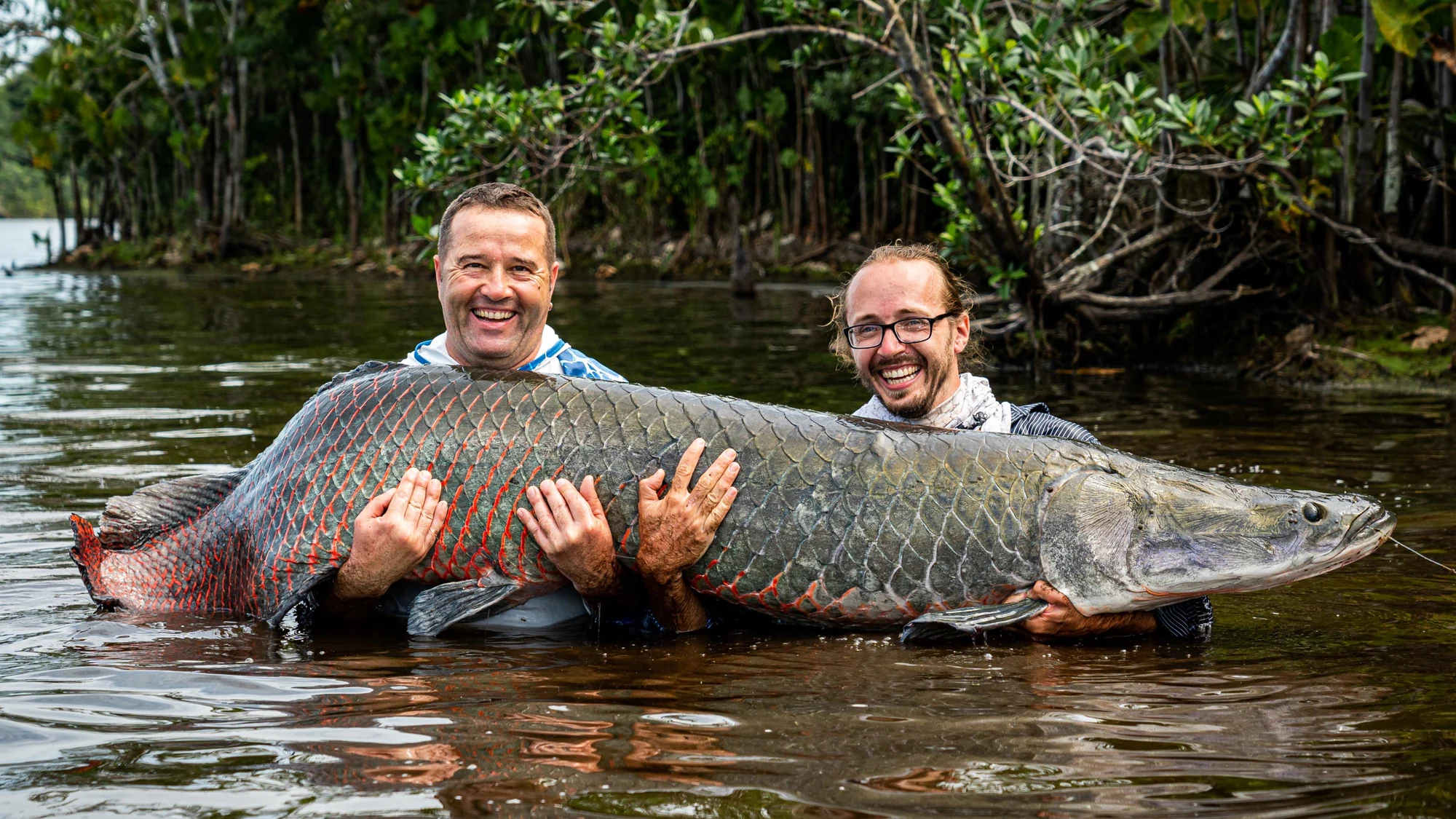
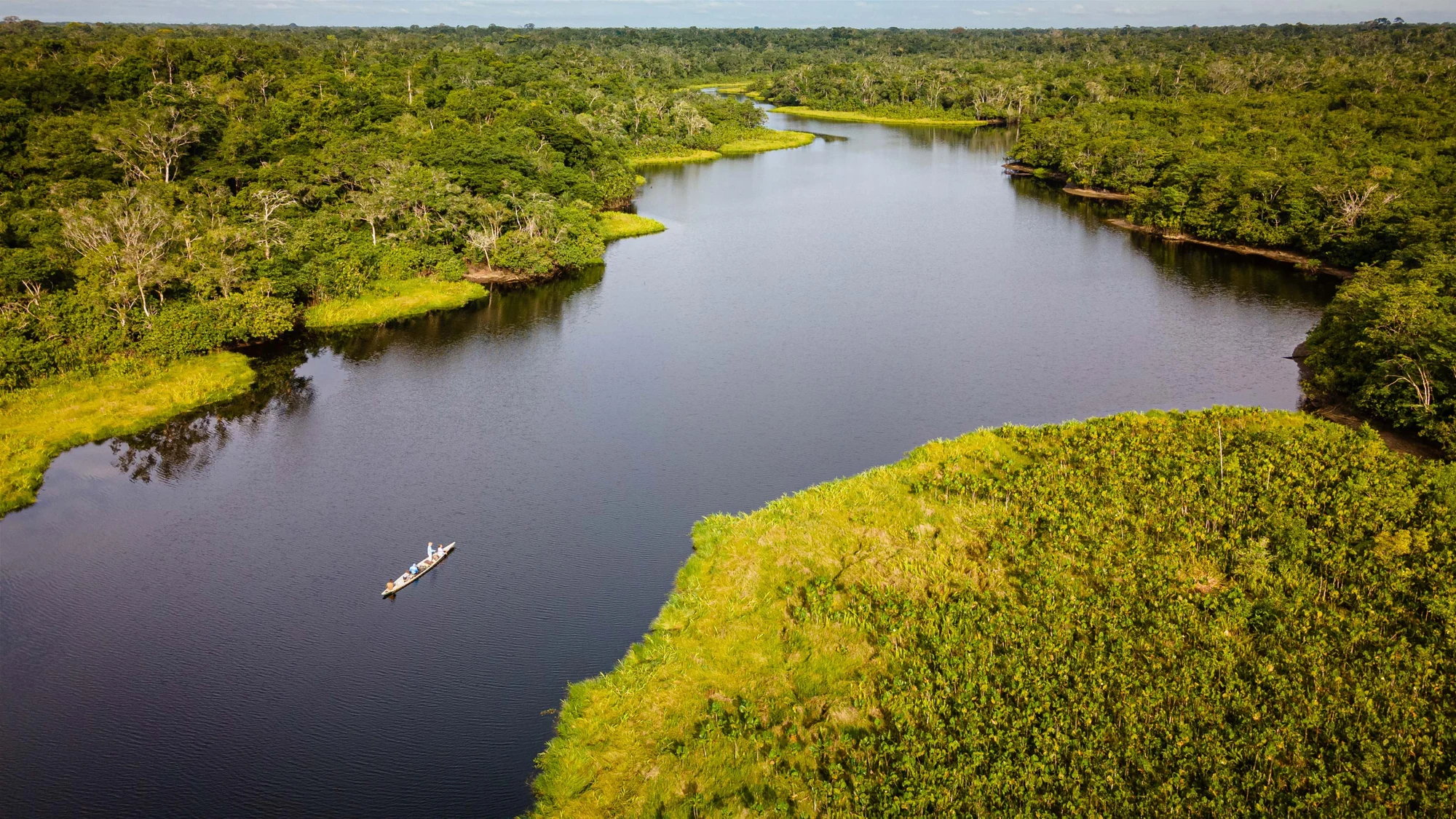
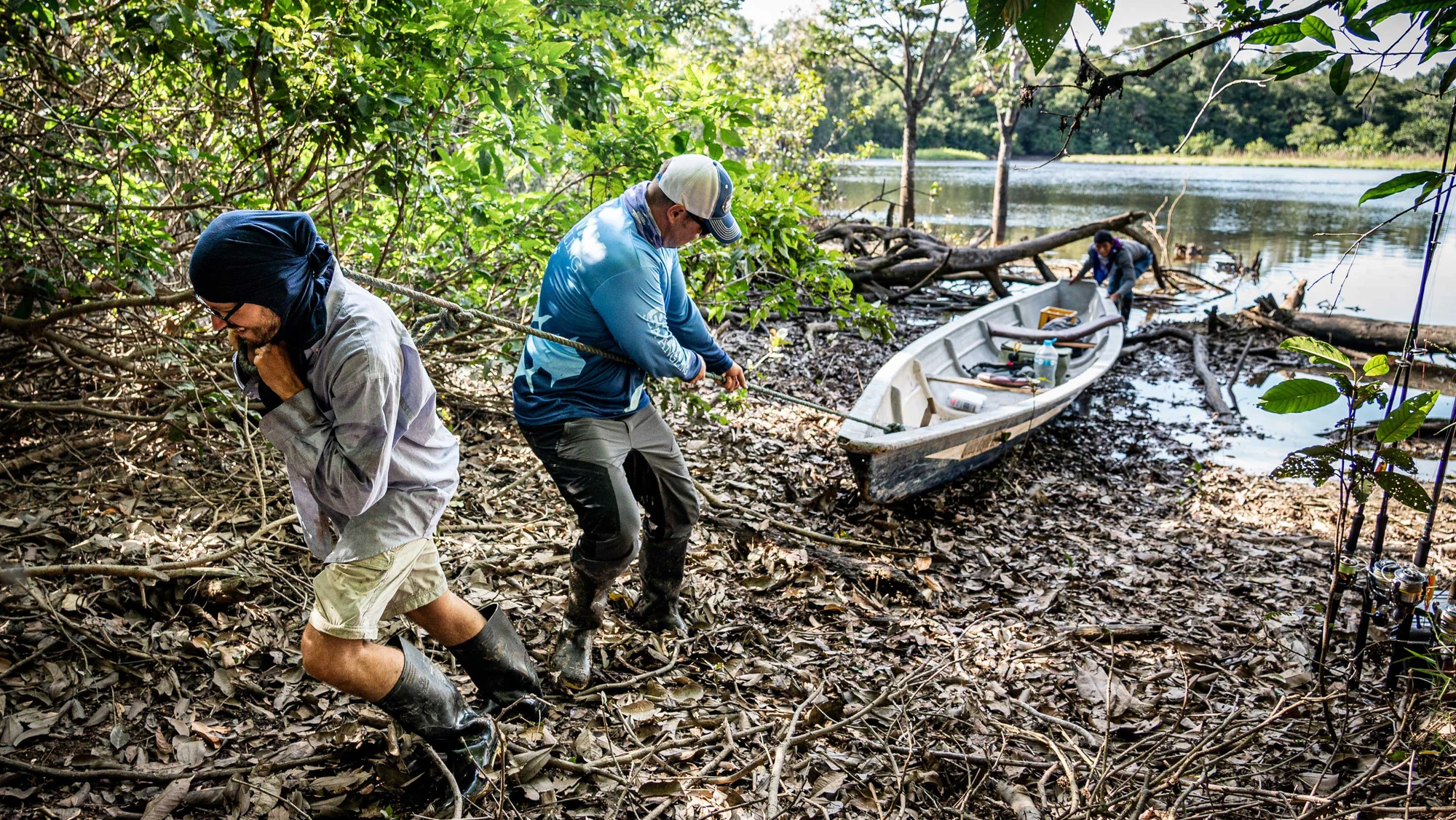
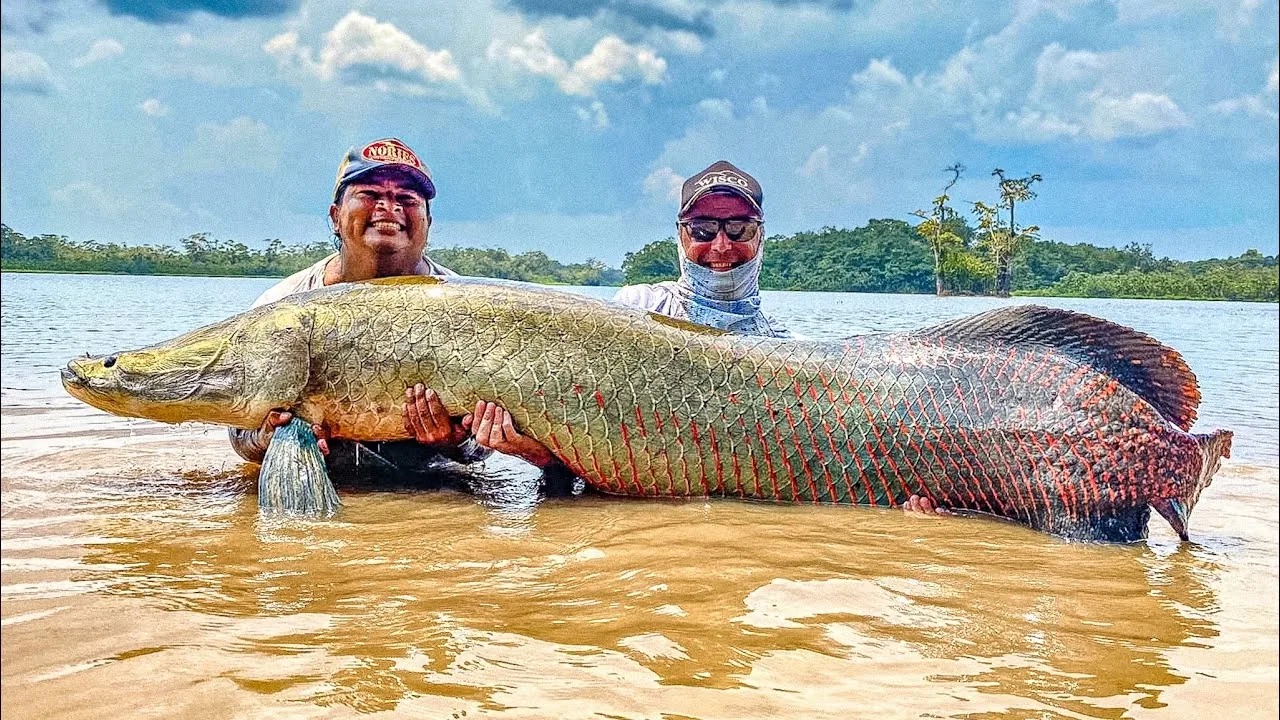
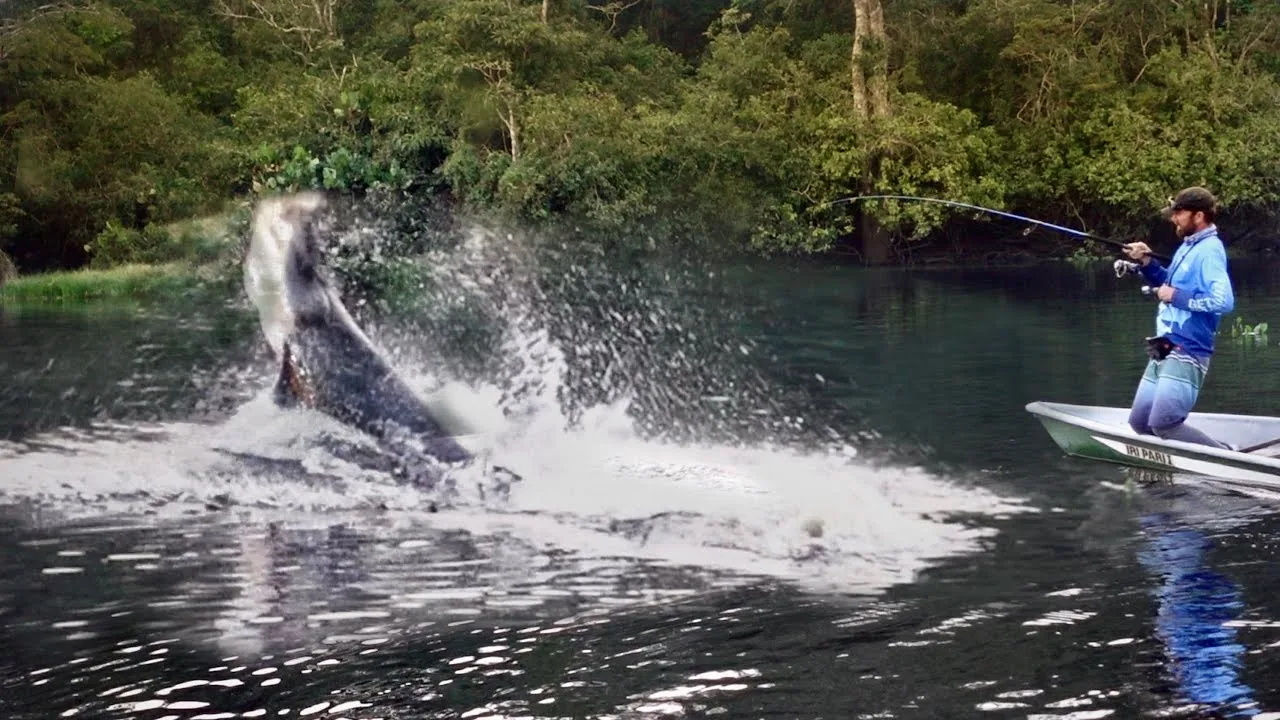
Now that you have made the acquaintance of the first jungle fish, the Arapaima is your next and ultimate challenge. The temperament of these giants, which can reach over three metres in length, dictates the approach. As the absolute top of the underwater food chain, the arapaima doesn’t need to approach anything with haste. It creeps sedately through the current-calmed lagoons (which are often only accessible through narrow channels and sometimes even only over land) and sucks in its prey fish with abruptly generated negative pressure. We would hardly notice any of this were it not for the special feature of the aerial view of an arapaima. Its swim bladder has a tissue similar to a lung, which enables it to breathe atmospheric air.
Depending on the activity and oxygen content in the water, the arapaima rises to the surface every 15 to 30 minutes to gasp for air.
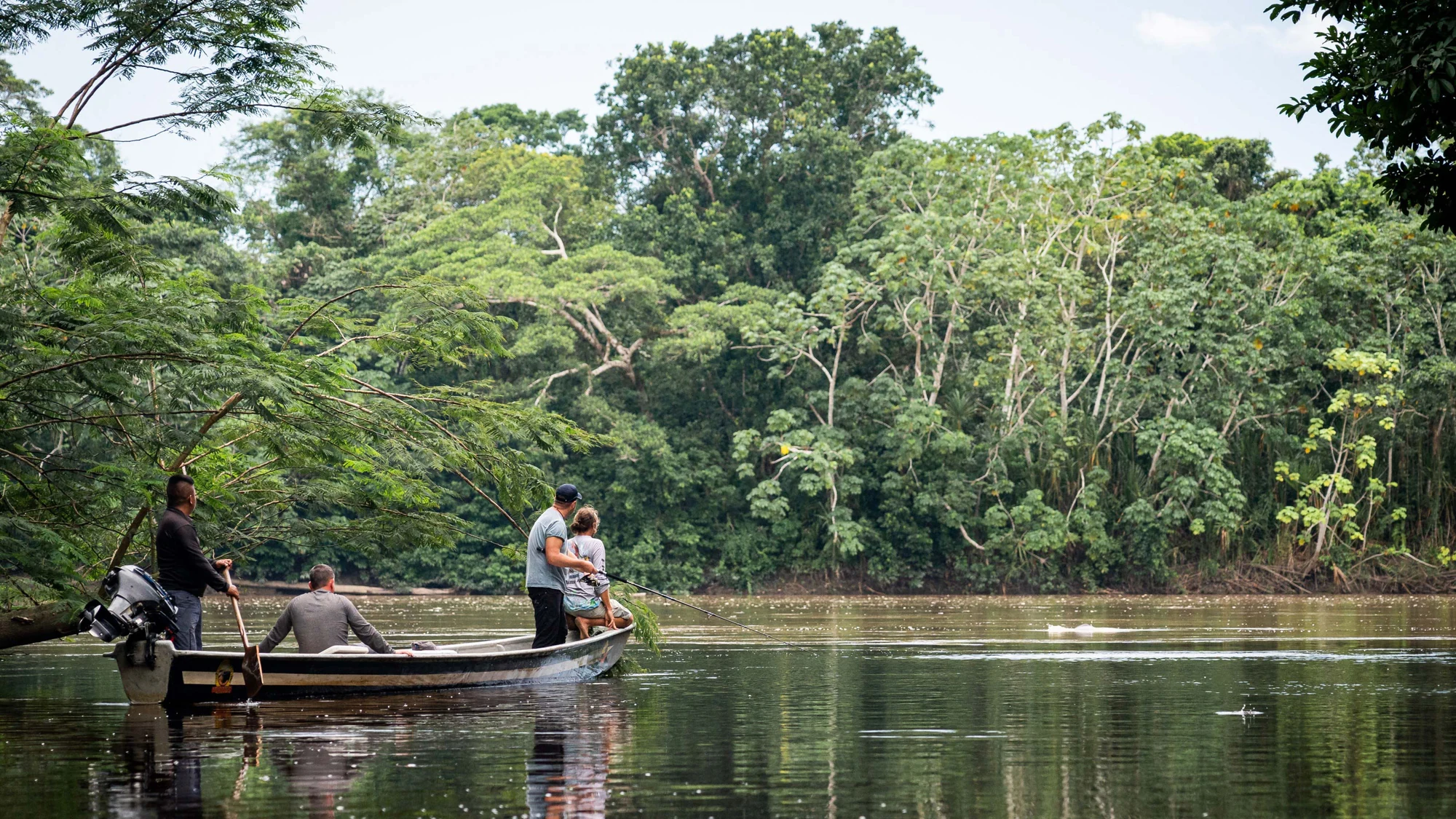
This type of fishing is more like sneak hunting than steady active fishing. Often you don’t have any bait in the water at all for 20 or 30 minutes because you are on the lookout for rising fish. Arapaimas are shy fish, so there is no talking on the boat, the paddle is thrust silently (!) into the water and under no circumstances should you rattle the fishing box!
Otherwise: fish warned, chance missed!
Also, only ONE bait may be thrown to the tipped fish at a time so as not to scare it away. You should therefore agree a fair system with your fishing partner before the fishing day so that both anglers have the same chances of getting their dream fish on the line. “Fish for fish” has proven to be very effective here. After every fish that is spotted and hooked, the other angler gets the next opportunity for a bite.
After that you change again.
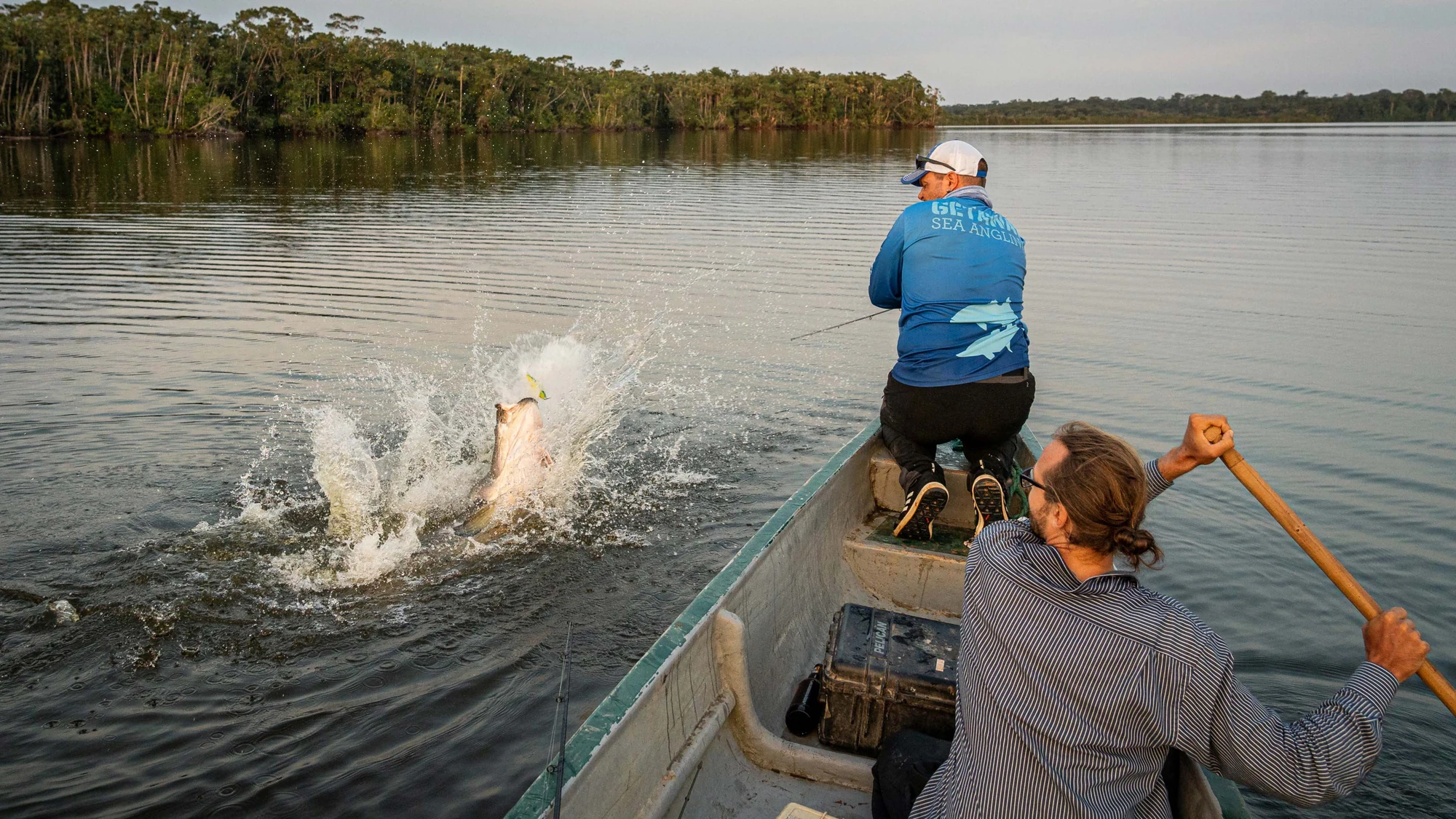
Once an Arapaima has taken your bait, there is no doubt about it. The bait disappears with many litres of water into the mouth of the arapaima and provides a dull thump in the rod. Immediately set the hook! Gladly a second and a third time! The mouth of this Amazon giant consists almost entirely of bones and the hooks find it difficult to hold. Often the first few seconds decide whether the fish sticks or not.
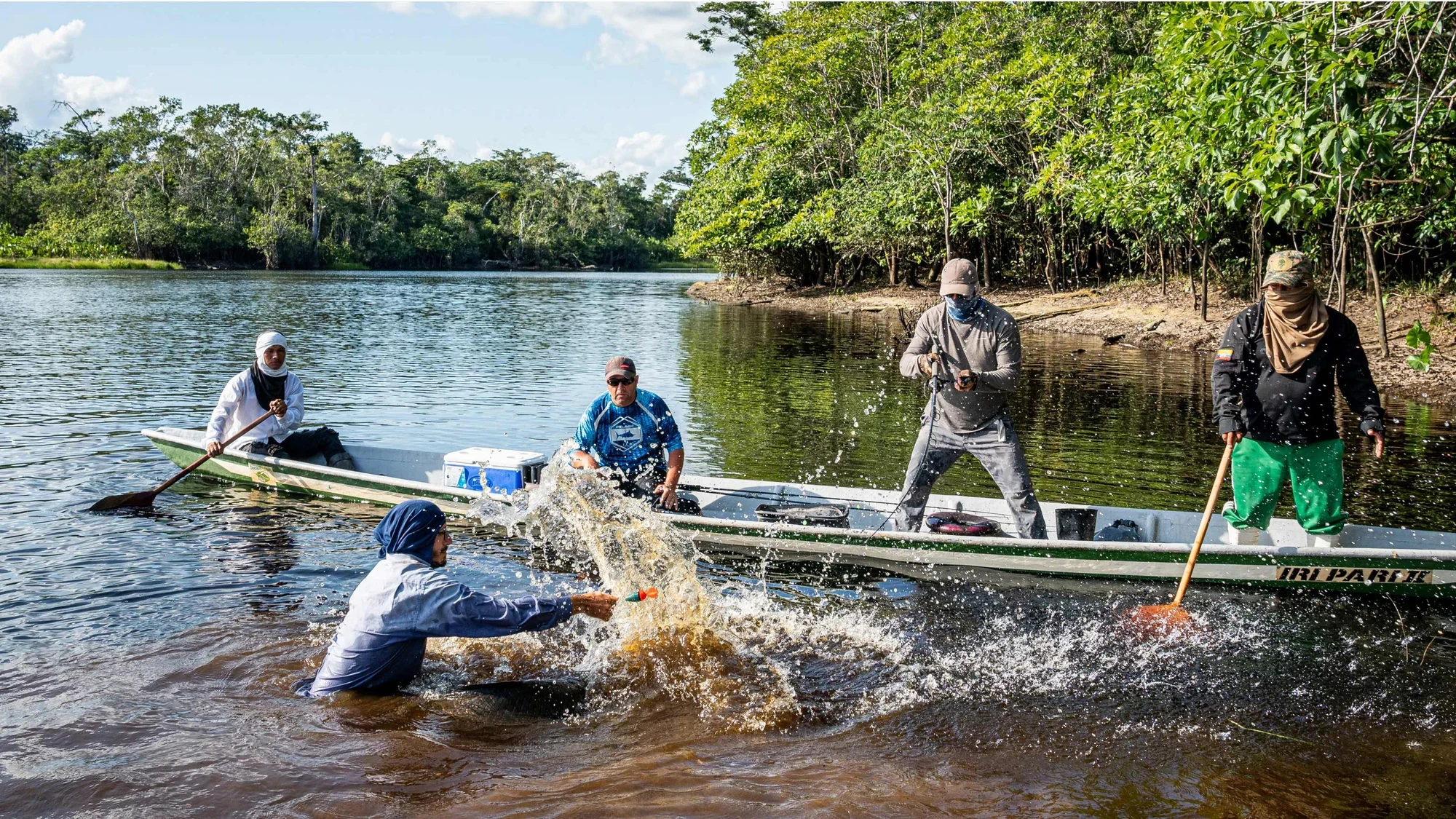
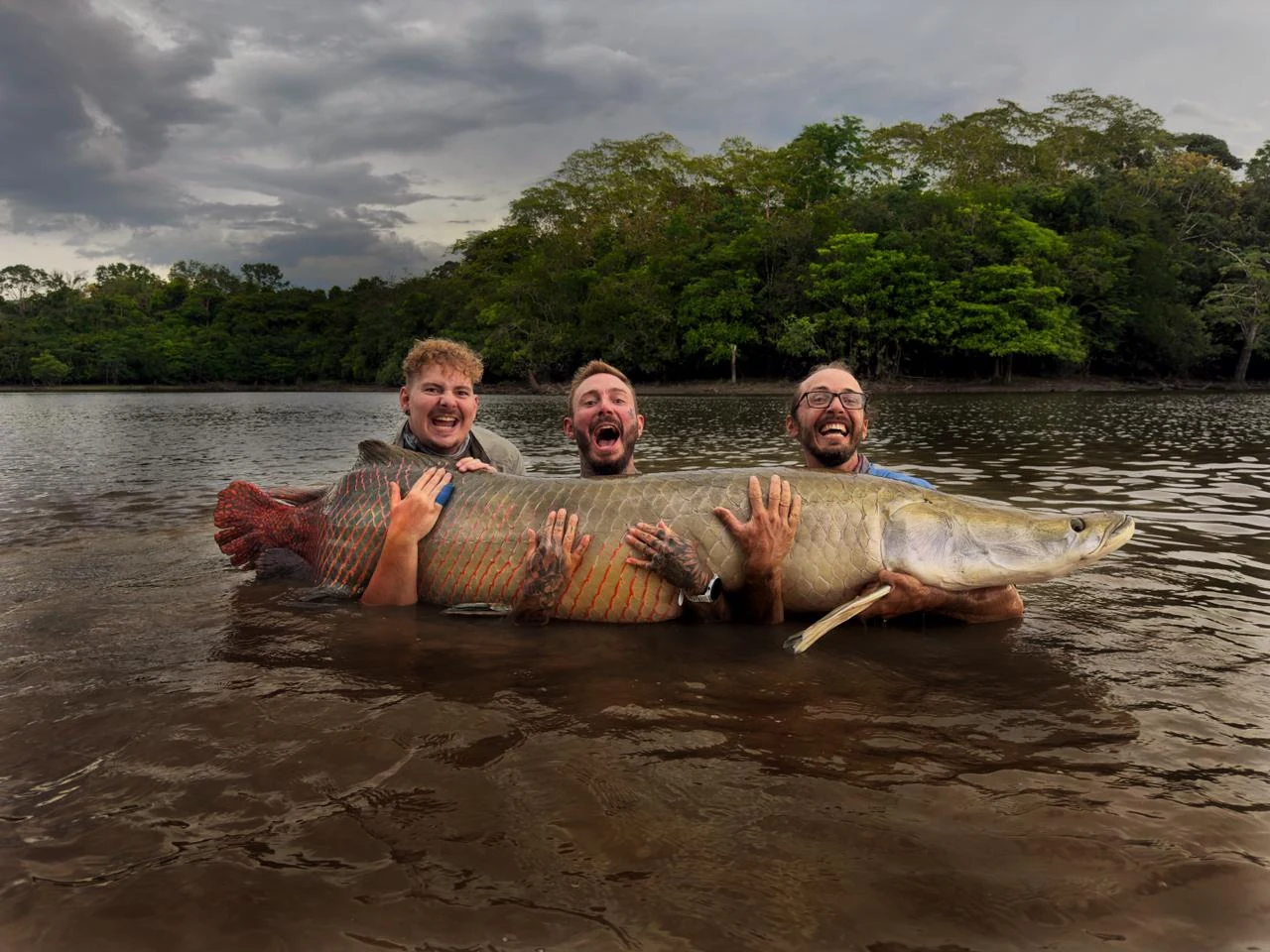
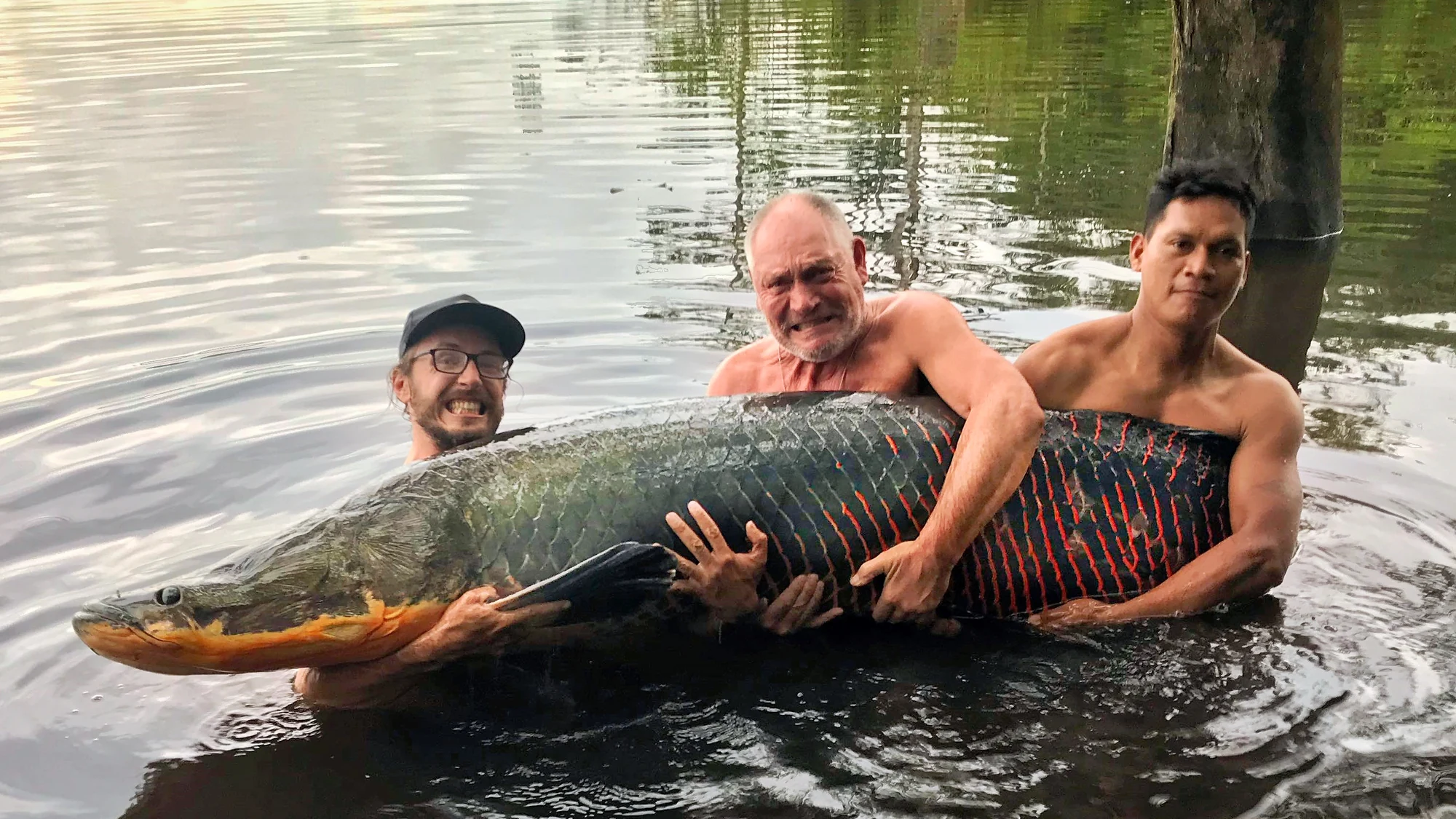
Unfortunately, you have to prepare yourself for a high loss rate – it’s just part of the game. If all goes well, an overdose of adrenaline is pumped through your veins, your heart races! The Arapaima is no different. It almost always starts to jump and shakes its mighty skull threateningly. Even at this early stage of the fight, you can see what you are up against. A fish of 100 pounds is considered average, 100 kilos are not rare! Such fish have a girth like a man’s chest. But do not rejoice too soon! A fish is not considered caught until it is caught. This means that even if one of the helpers has jumped from the canoe into the water to grab the arapaima at the end of the fight and prepare it for the picture, fish are still lost now and then.
Arapaimas are unpredictable! Will you accept the challenge?
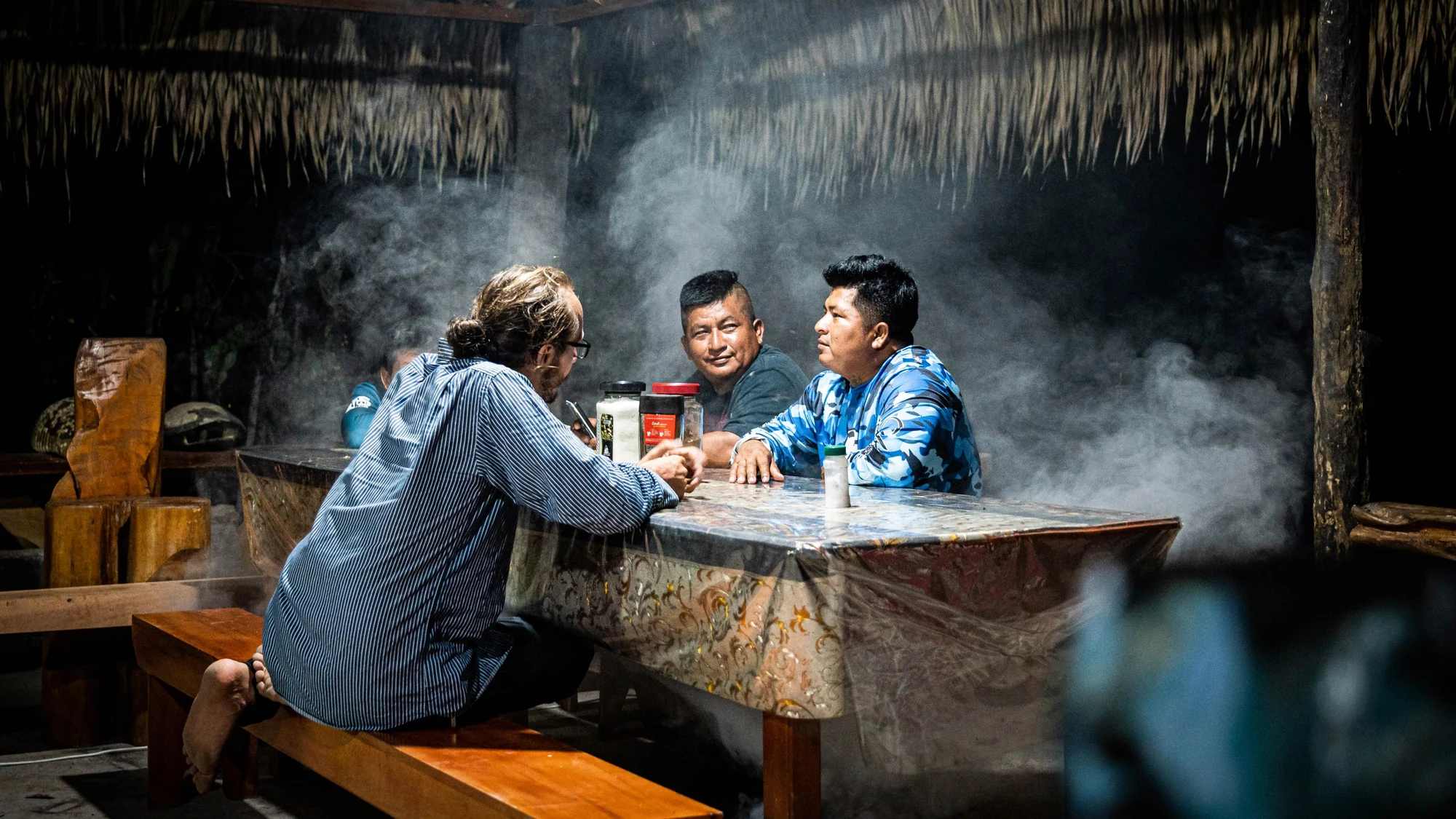
The food is simple and European-oriented. Exotic foods are not prepared as standard, but in addition to rice and noodles, plantains and yucca root tubers (whose taste is almost identical to potatoes) serve as sources of carbohydrates, fish and poultry, eggs as well as salad and vegetables complete the daily freshly prepared hot plate dishes. Fresh juices, mineral water, coffee and tea are always available at the camp.
Soft drinks and beer can be ordered optionally.
The base camp is located directly on the river and has a generator that provides electricity during the hours of presence. Batteries and powerbanks can therefore be recharged at any time.
If you wish, you can also go to more distant fishing areas that require overnight stays outside the base camp. Here you sleep in one-man tents set up in open shelters, so you don’t have to do without rudimentary comfort. Toilet and shower facilities are also available here.
Mosquitoes and other bloodsuckers are present in surprisingly small numbers and can be kept away very well with the usual mosquito repellent. We recommend “Nobite” skin and clothing spray, as well as a Thermacell device for cosy get-togethers in the evening.
The most important realisation: The jungle will not eat you up!
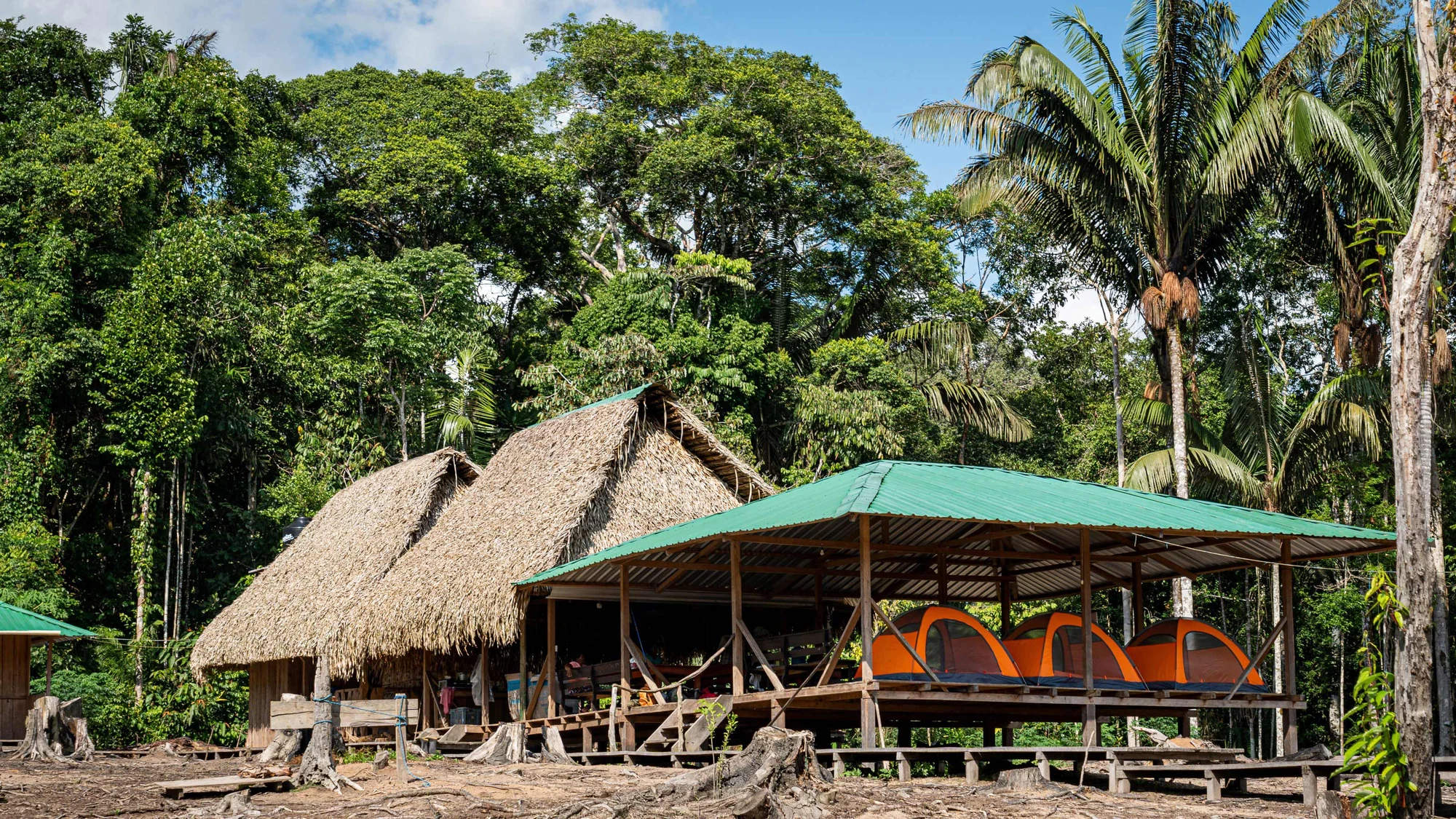

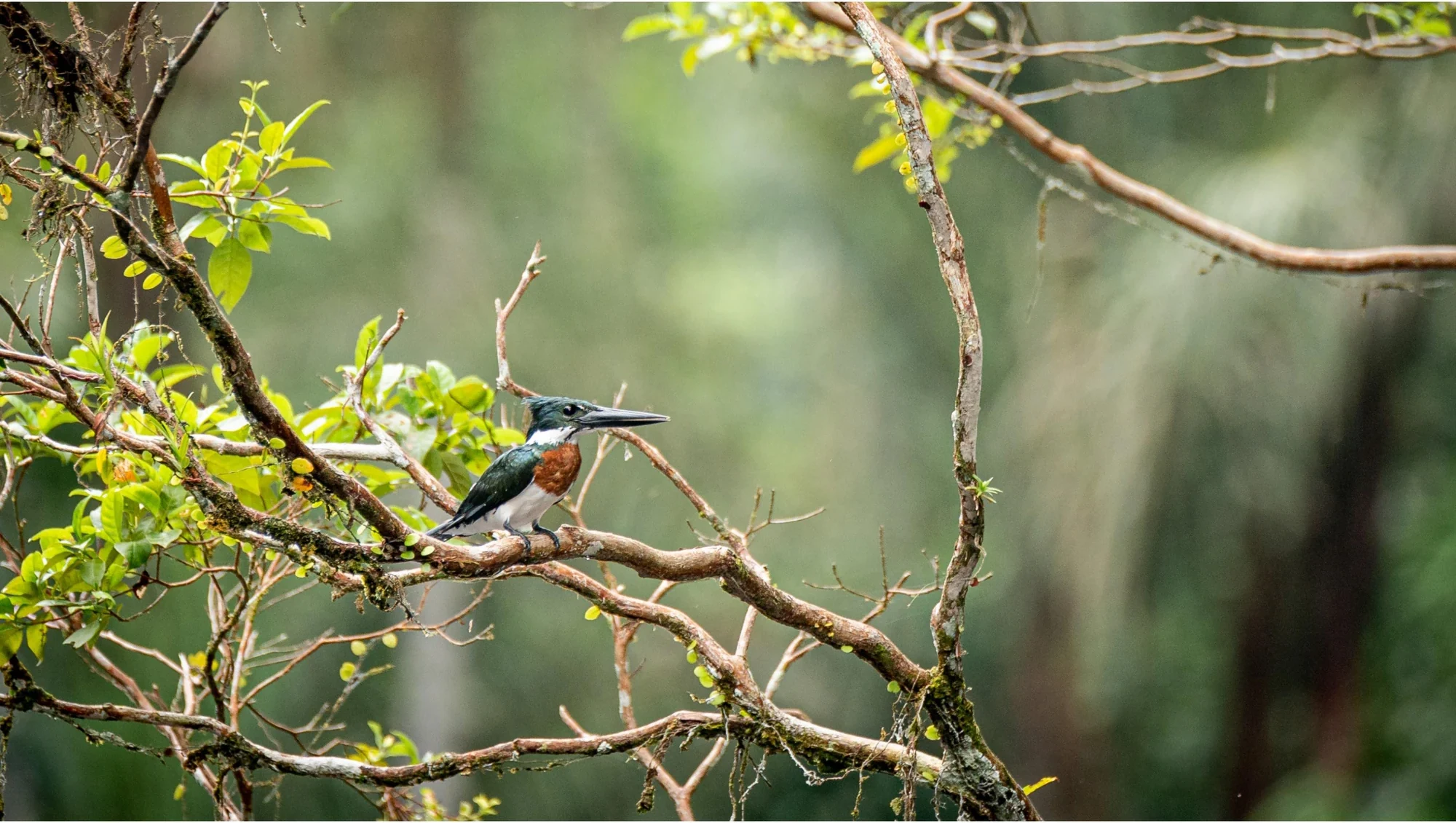
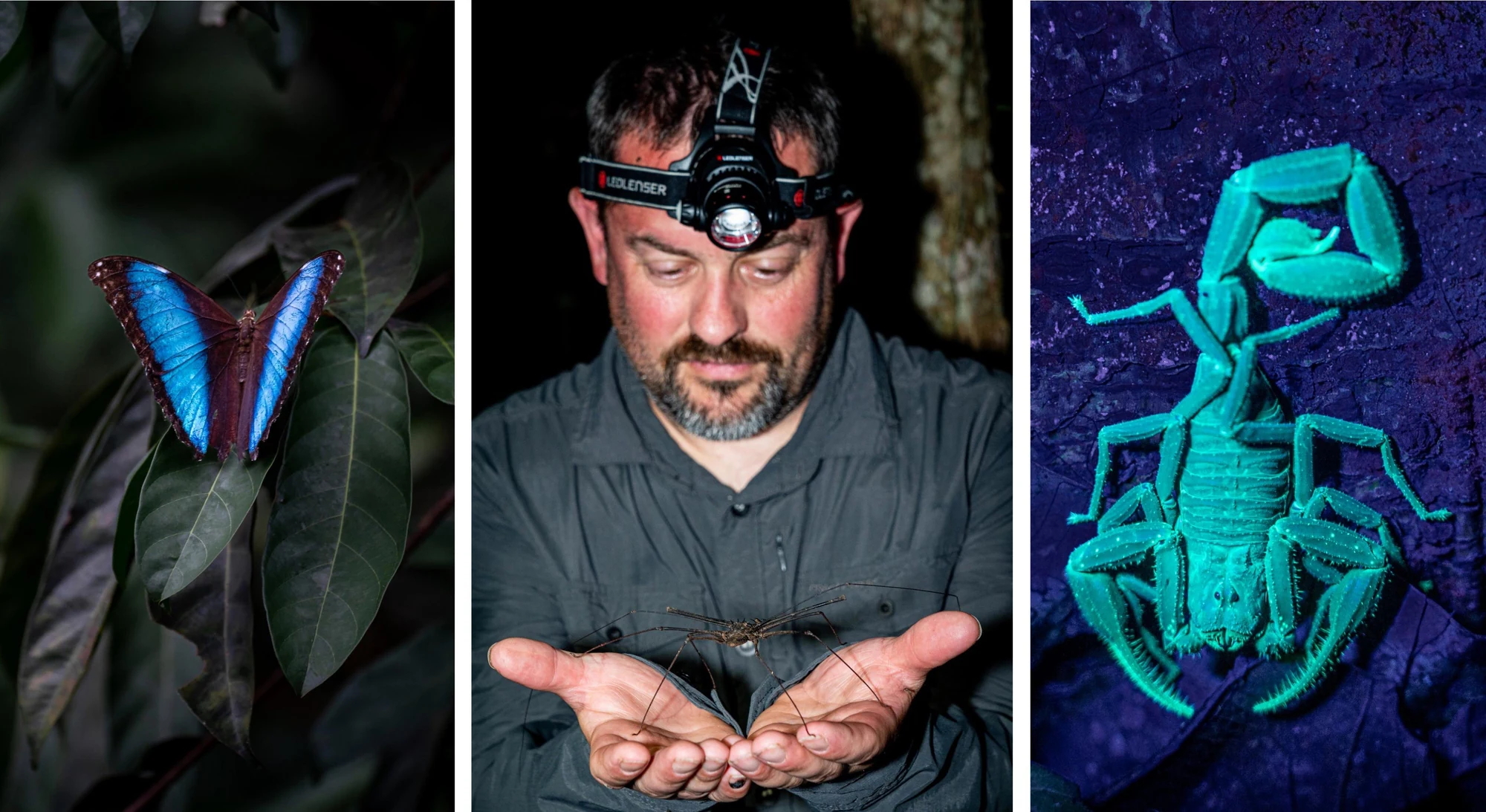
Unlike many other Travel2Fish destinations where you spend the entire fishing day at sea, in Ecuador you are in close contact with the jungle for 24 hours a day. You will see and hear animals that you have probably only seen on TV. The diversity of species and plants is overwhelming. You will encounter freshwater dolphins, caimans, giant otters and turtles on the water. In the shore vegetation you can discover up to nine species of monkeys, as well as countless bird species such as tucans, parrots and various kingfishers. If you wish, our local partner will also be happy to take you on a guided jungle night tour to track down exotic small animals such as insects, frogs and snakes. By the way, if you are afraid of these animals, you will find out that you have to look hard to come across them.
So the jungle will not eat you up – you can say that twice!
The fishing season at our location is from early September to end of February.
This corresponds to the dry season where rain is rare and water level is generally very low. While this renders the access to some area harder, it concentrates the fish and makes fishing for most species way easier and more productive.
It does not mean that it is impossible to experience rain since it is called “rainforest” for a reason.
Better be prepared!

PRICE: from USD 4.500 (plus international flights)
INCLUDED:
NOT INCLUDED:
As standard we offer our trips with 7-10 fishing days. Shorter stays are not recommended due to the complex logistics involved. Just contact us for individual planning!
If you would like to go fishing in Ecuador, our package is guaranteed to be the right choice for you. If you are still unsure or have any questions, please feel free to contact us.
We look forward to creating an unforgettable fishing holiday for you!
Your team from Travel2Fish
Last updated: 17.06.2026
More individual dates available. Just get in touch with us!
Loading the video transfers data to YouTube.
Loading the video transfers data to YouTube.

Loading the video transfers data to YouTube.
A few days have passed now, and I still look back on our tour deep in the Amazon rainforest in Ecuador with a big smile on my face.At the beginning …
At the beginning of October, a group of our travelers was in Ecuador and what the guys were able to experience locally was simply indescribable. Francis, our local man, reports:
The Amazon rainforest and its rivers remain unpredictable and are often subject to strong water level fluctuations. Unfortunately, this was also the case for our tour group in …
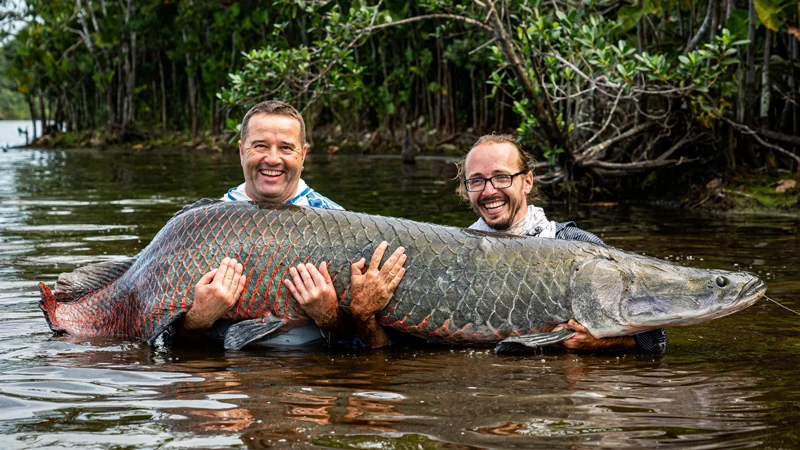
Journey to the Jungle King – The Arapaima is undoubtedly the king of fish in the Amazon River system and can only be found today where civilization has not spread …