ANGOLA – FLAMINGO LODGE
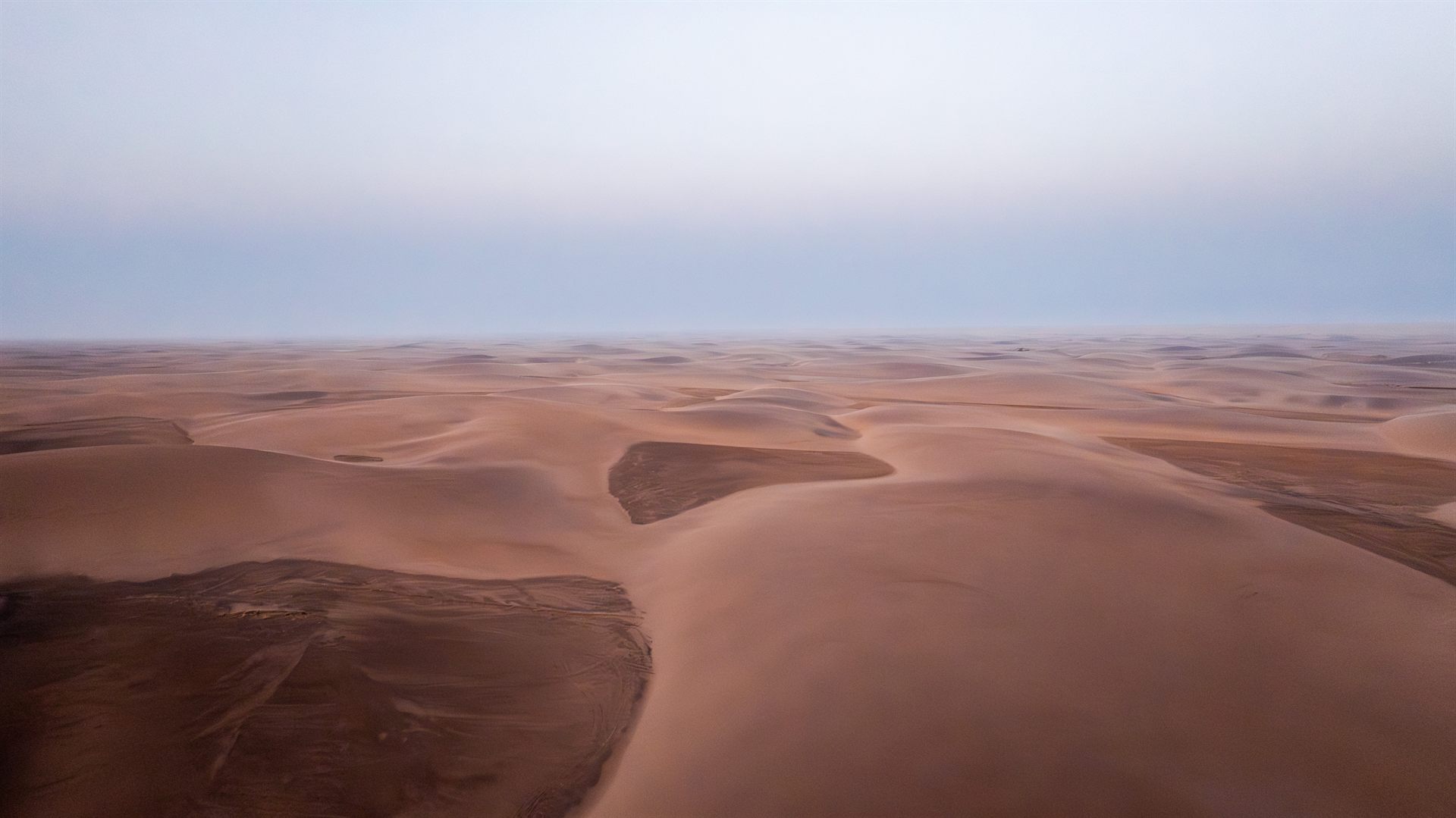
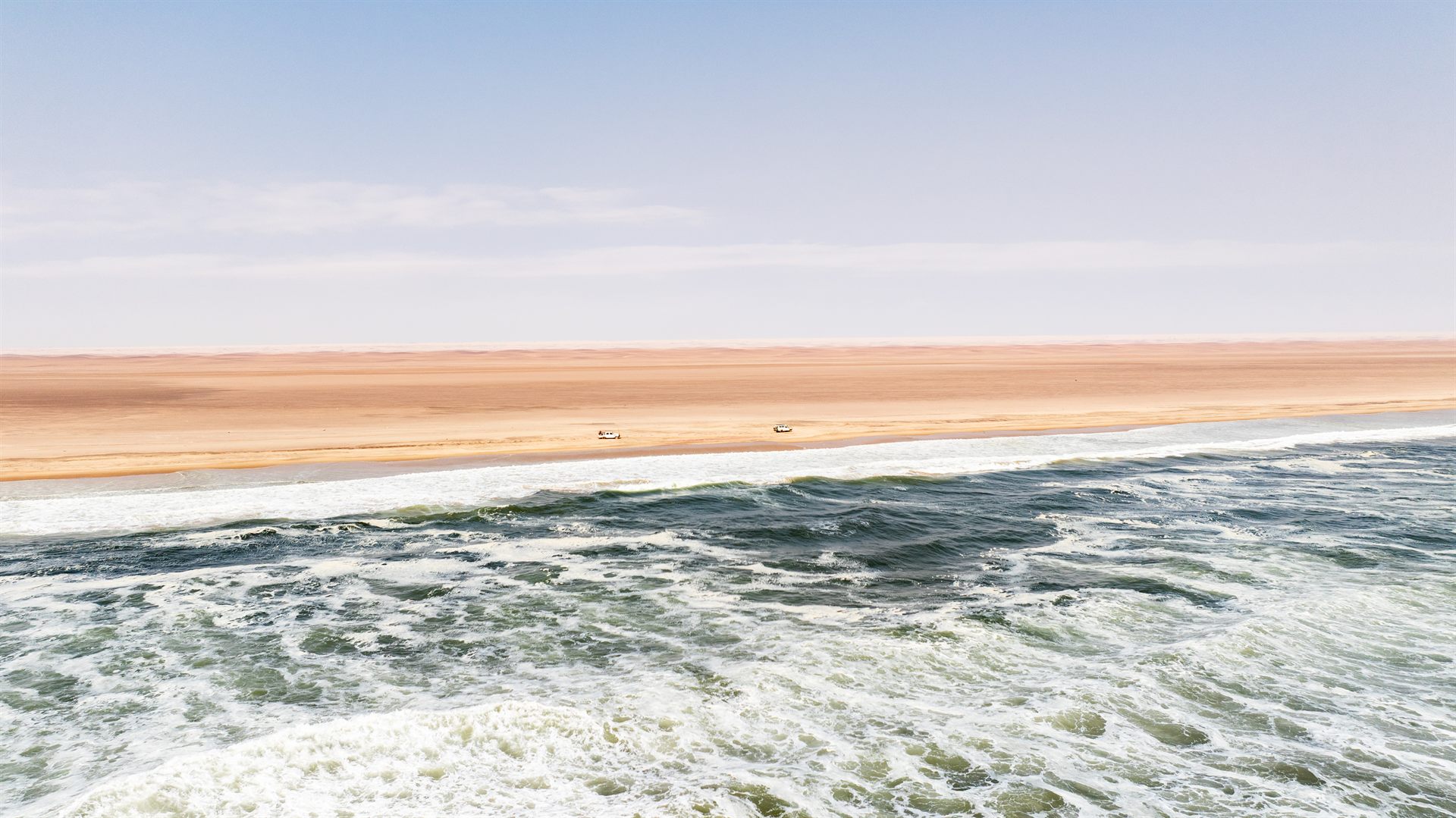
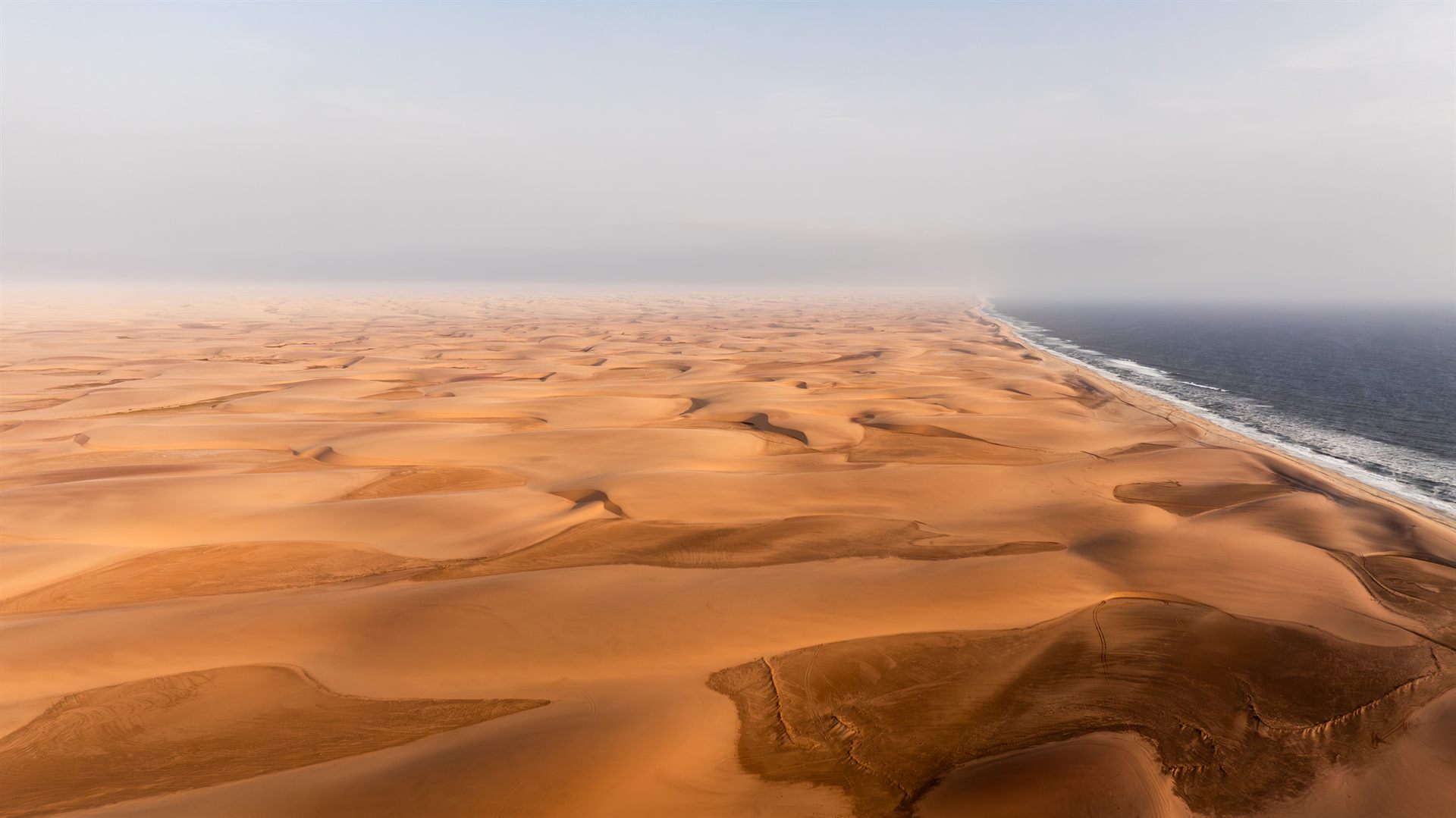
There are coastlines where you go fishing – and there are coastlines where you feel like the first human being to set foot in centuries. The Namibe coast in southern Angola belongs to the second kind. Here, the oldest desert in the world runs in one unbroken line into the cold Atlantic, and more than 70 kilometres of uninhabited beach lie so empty before you that the only footprints in the sand will be your own. Right in this stretch of nothing, at the mouth of the dry Rio dos Flamingos, sits the Flamingo Lodge – our second Angolan fishery alongside the well-established Kwanza Lodge and a completely different fishing experience. No river, no mothership, no long boat rides: here you stand in the surf, cast your lure into the pounding waves and reckon with every single cast that a trophy kob, a lightning-fast garrick or a shoal of shad will strike. Welcome to southern Angola!
OUR TOP 10 REASONS FOR YOUR FISHING TRIP TO THE FLAMINGO LODGE
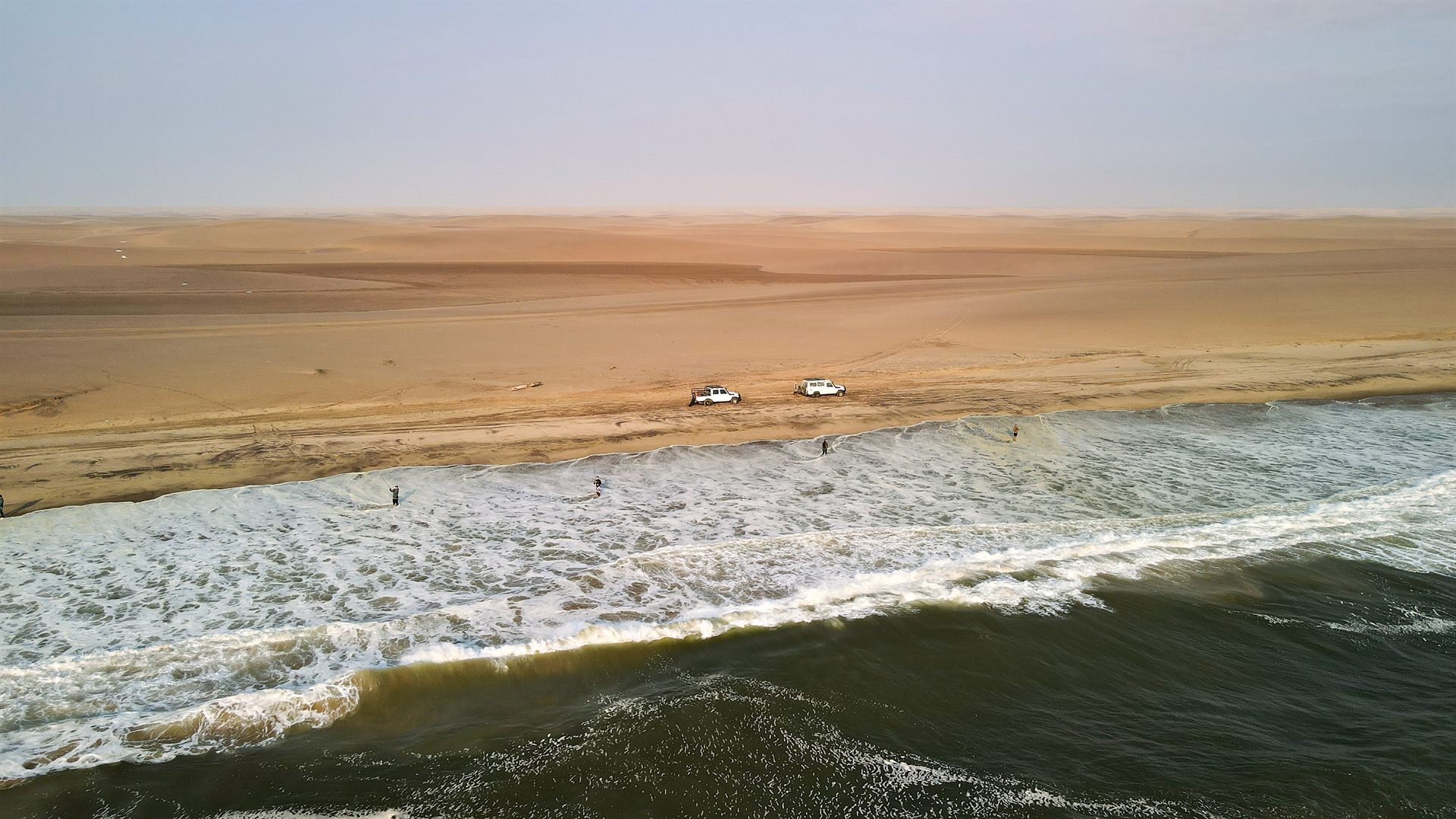
- More than 70 kilometres of completely uninhabited coastline – no beach tourism, no competition on the water
- The waters remained virtually unfished through decades of civil war and have developed into one of the most productive coastal fisheries in Africa
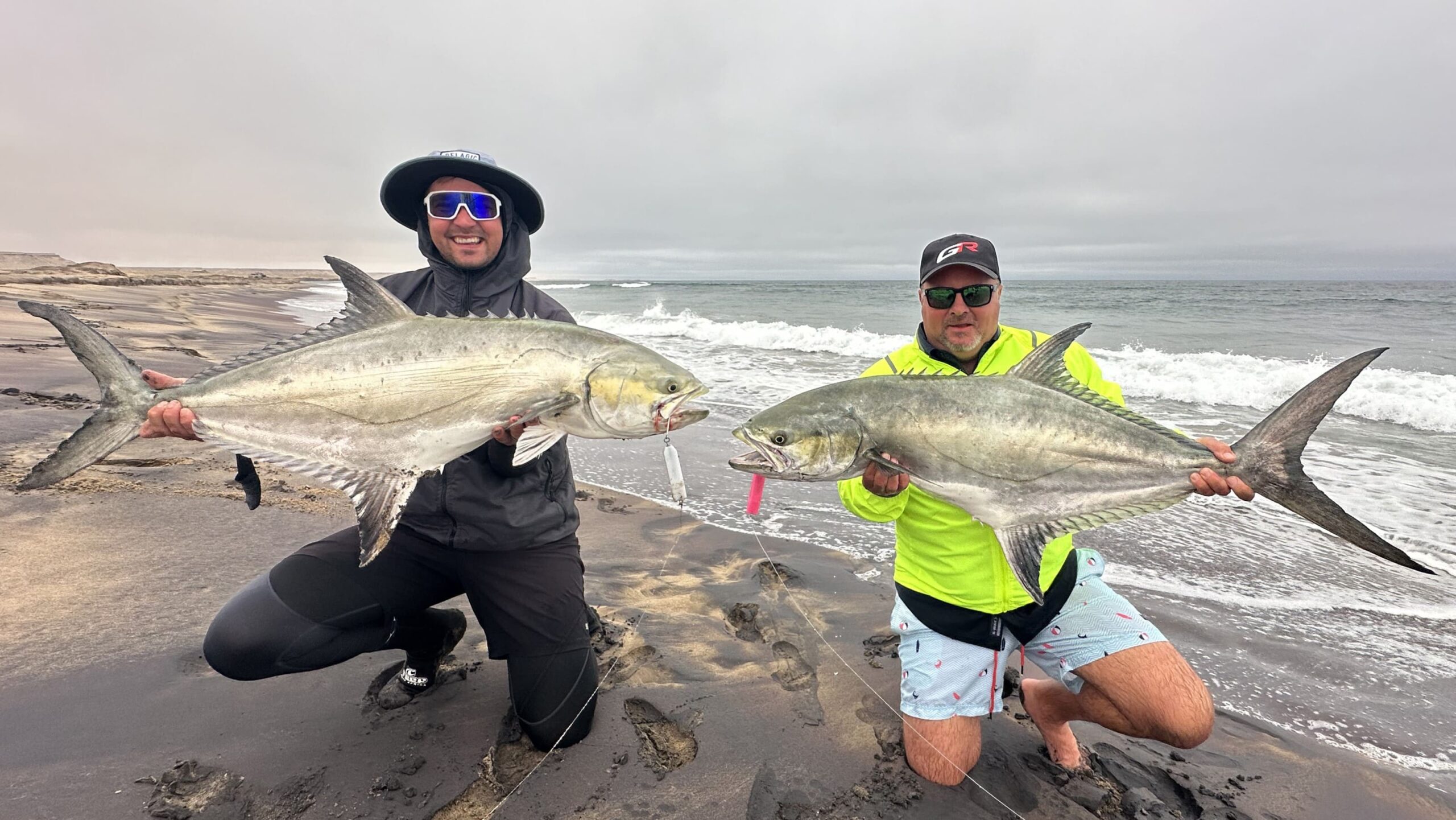
- Kob (Argyrosomus coronus) as the trophy target species, caught straight from the surf
- Garrick (leerfish) and shad (bluefish) in large numbers – the bluefish especially keeps your rod working all day
- The cold, nutrient-rich Benguela Current pushes enormous amounts of baitfish right up to the beach
- Pure shore fishing: no boat rides, no seasickness, and you decide for yourself how long you fish
- Strict catch & release – the lodge protects its stock rigorously
- Experienced South African guides and German-speaking tour hosting
- Desert and ocean side by side: flamingos, seals, dolphins, whales, oryx antelope and brown hyenas all in one day
- Comfortable bungalows with en-suite bathroom just above the beach – you fall asleep to the sound of the surf
WHAT AWAITS YOU ON YOUR FISHING HOLIDAY IN SOUTHERN ANGOLA
This is how your fishing adventure begins:
Your international long-haul flight from Europe first takes you to Luanda, the capital of Angola. From there, a domestic flight brings you south to Namibe and its Welwitschia Airport. The lodge is another 90 to 120 minutes away by transfer – and this part of the journey is already part of the adventure.
The road leads out of the provincial capital towards Tombua, and with every kilometre the landscape becomes more barren, wider and quieter. Around 100 kilometres lie between the airport and the lodge. At some point the vehicle leaves the tarmac, tyre pressure is dropped, four-wheel drive engaged – and the final stretch runs off-road through the dry bed of the Rio dos Flamingos. When the view opens up at the end of that riverbed and you see the surf rolling onto a completely empty beach for the first time, you understand why the journey is worth the effort.
At the lodge you move into your bungalow, rig your tackle at your leisure and get your briefing from the guide: where the gullies lie, how the tides run this week, which lures are currently working. If you like, you can make your first casts that same afternoon – the beach is right on your doorstep.
YOUR FIRST DAY OF FISHING ON THE NAMIBE COAST
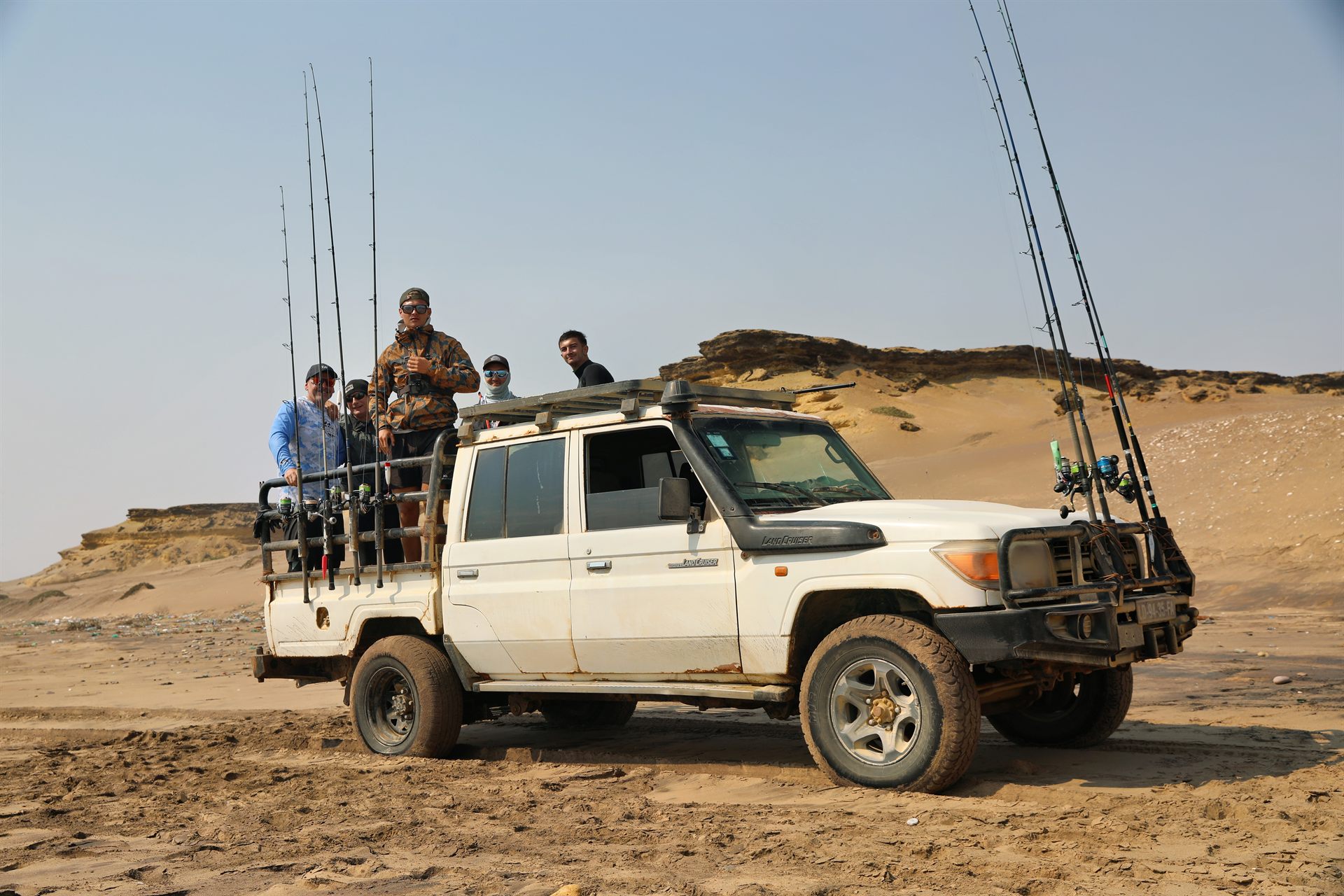
The day starts early but relaxed. After breakfast at the lodge, you head along the coast with your guide in the 4×4 – and “along the coast” here means: across the beach, for kilometres on end, without meeting another soul. All the while your guide reads the water: Where does the wave break irregularly? Where does a darker colour betray a deeper gully? Where does the water sit over a reef? Exactly these spots are the addresses where kob and garrick lie in wait for prey.
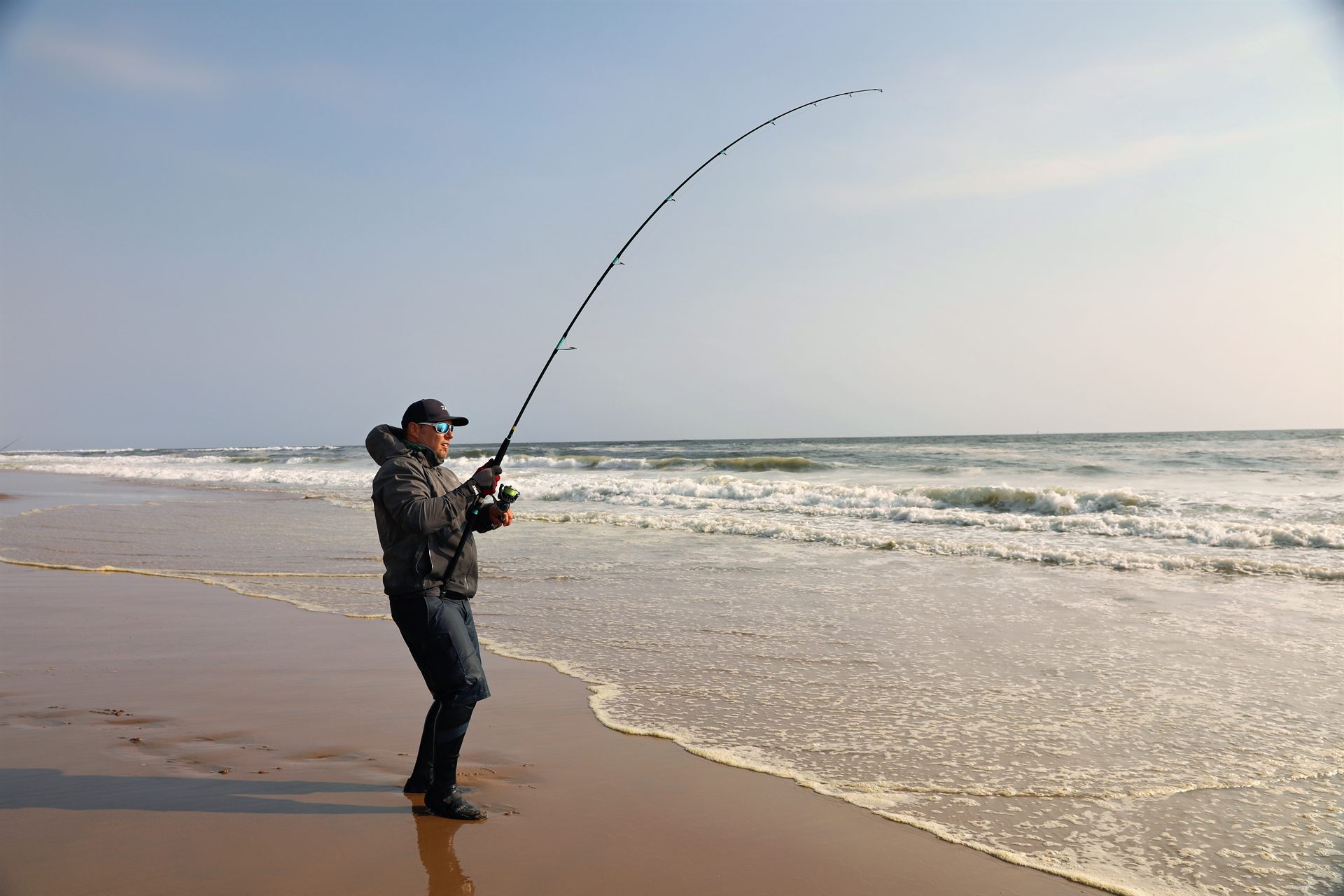
Then you stand in the water, cast your stickbait or spoon across the gully and work it back. With shad, the first contact often comes within a few casts, and then usually several times in a row – these fish are anything but shy and attack practically any lure that passes them. They make sure boredom never sets in, and for many of our guests they are the finest way to get used to the surf.
The kob, on the other hand, is the trophy you work for. The bite rarely comes spectacularly; it is a heavy, dull stop in the lure’s run – and then suddenly there is a force in the line that pulls you backwards into the surf, back bent. When the sun sets over the Atlantic in the evening and you drive back to the lodge with salt-crusted gear, you are guaranteed to have a story in your luggage.
THE FISHING DURING YOUR ANGOLA FISHING HOLIDAY
The fishing at the Flamingo Lodge is surf fishing in its most direct form. Most of the fishing is done with the spinning rod – plugs, meaning stickbaits and poppers, plus heavy spoons and soft lures are the first choice and reliably cover the three main target species. If you prefer to wait for a big kob with natural bait, you can do that too; the guides will show you which gullies are worth it.
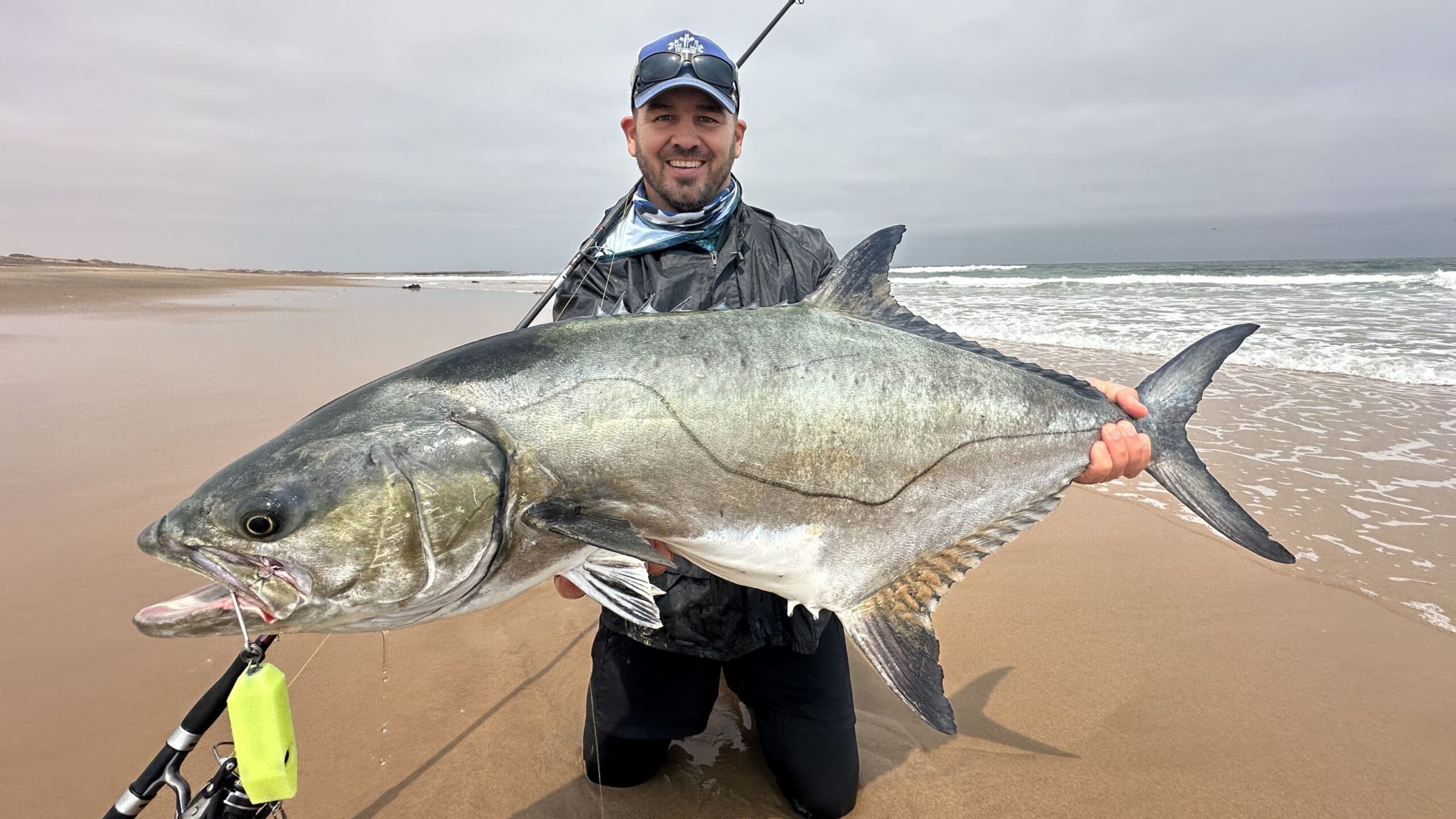
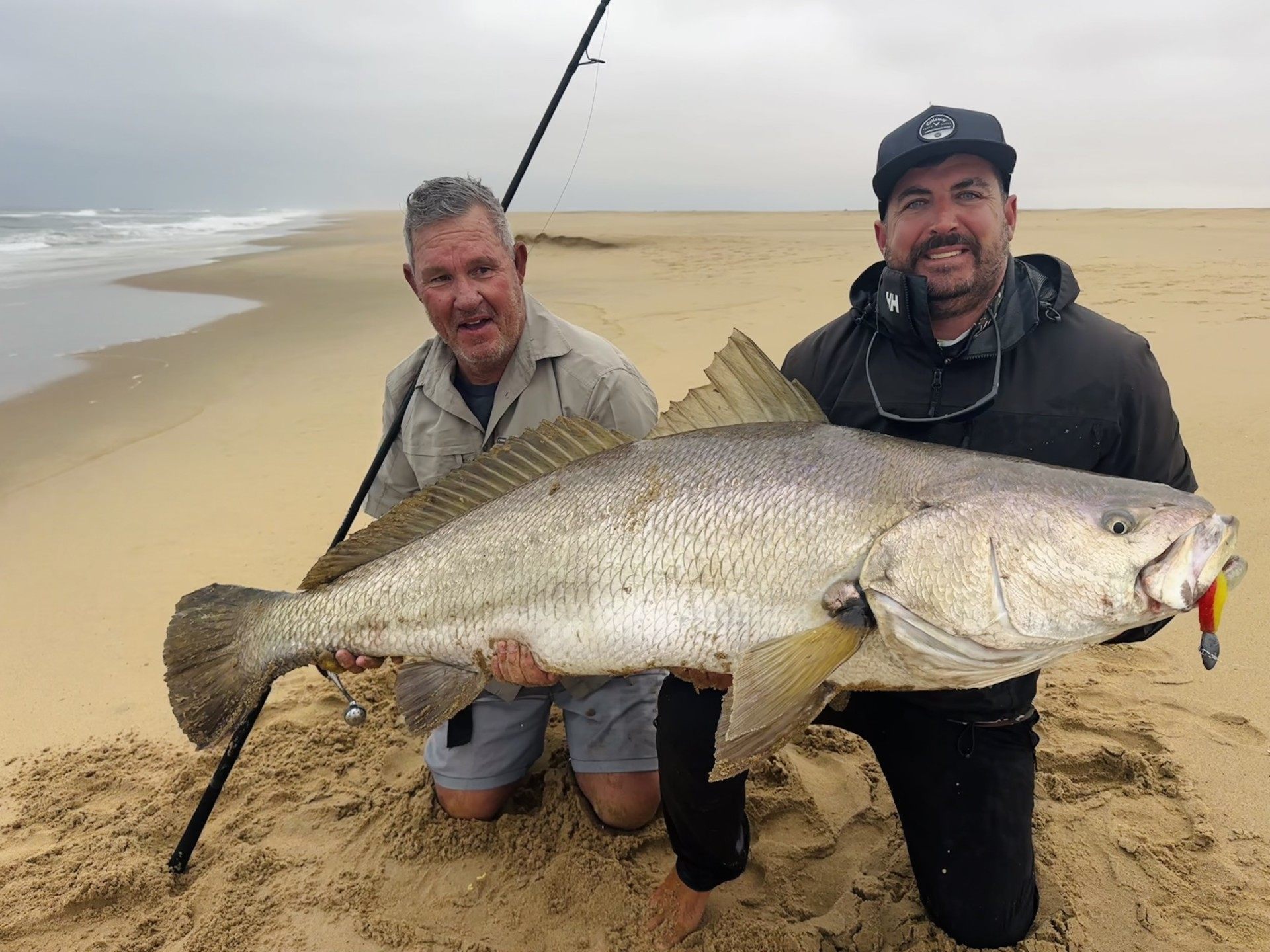
Kob (Argyrosomus coronus) is the fish you travel to this coast for. The West African relative of the South African kob grows to remarkable sizes here and is a tough, powerful opponent that skilfully plays the surf against the angler.
Garrick (Lichia amia), also known as leerfish, is the fastest predator in the fishery. Garrick hunt aggressively on the surface, often follow lures right up to your feet and deliver long, blistering runs after the bite – for many anglers the most emotional fish of the week.
Shad (Pomatomus saltatrix), the bluefish, is the clear number one in terms of numbers. It arrives in shoals, bites without compromise and keeps you busy all day long. A leader with sufficient bite resistance is mandatory – the shad has an impressive set of teeth.
Depending on season and form of the day, these are joined by steenbras, barracuda, jack crevalle, various grunter species as well as guitarfish and smaller shark species. With every cast, you never quite know what is hanging on the other end – and that is exactly what makes this coast special.
Good to know: Strict catch & release applies at the Flamingo Lodge. So that every fish goes back into the water in the best possible condition, treble hooks are only permitted to a limited extent – most fishing is done with single hooks. Ultra-light tackle is also prohibited, so that fights stay short and the fish are not overstressed. We consider this exemplary and ask you to put your tackle together accordingly.
TYPICAL ITINERARY OF YOUR FISHING TRIP TO THE FLAMINGO LODGE:
Day 1: Departure from Europe
Day 2: Arrival in Luanda/Angola, domestic flight to Namibe (Welwitschia Airport), transfer to the Flamingo Lodge (approx. 90–120 minutes), check-in to the bungalows, briefing, first casts right in front of the lodge in the afternoon
Days 3–9: 7 full days of fishing along the coast
Day 10: Transfer back to the airport, return flight
Day 11: Arrival back home
Travel date 2027: Hosted group trip with tour guide from 10 to 20 July 2027 – currently 4 places still available. Group size is limited to a maximum of 9 anglers plus tour guide.
Tip: An extra day on site is well worth it. From the lodge you can head out to the legendary Ilha dos Tigres, there are guided 4×4 tours into the Namib, snorkelling opportunities and – for everyone who also loves a board – first-class waves and kite conditions.
By the way: Would you rather not travel in a mixed group, but as a pair or a party of four? Talk to us. Individual trips are possible from as few as 2 participants – we also plan your Angola trip individually, including transfers and extension days.
THE RIGHT TACKLE FOR THE SURF IN ANGOLA
For the surf on the Namibe coast you do not need specialist tackle, but you do need solid gear – the fish here are strong, and the surf zone is unforgiving.
For spin fishing for garrick, shad and kob we recommend a surf spinning rod of around 2.70 to 3.30 metres in length with a casting weight of roughly 40 to 100 grams, combined with a robust, saltwater-proof spinning reel in the 6000 to 8000 class and a braided main line in the 30 to 50 lb class. An adequately long monofilament shock leader is important – it absorbs the strain of casting and of the surf.
With shad, a short, bite-proof leader is indispensable – the teeth of these fish cut through braid and thin fluorocarbon in seconds. Bring plenty of spares; losses are part of the game.
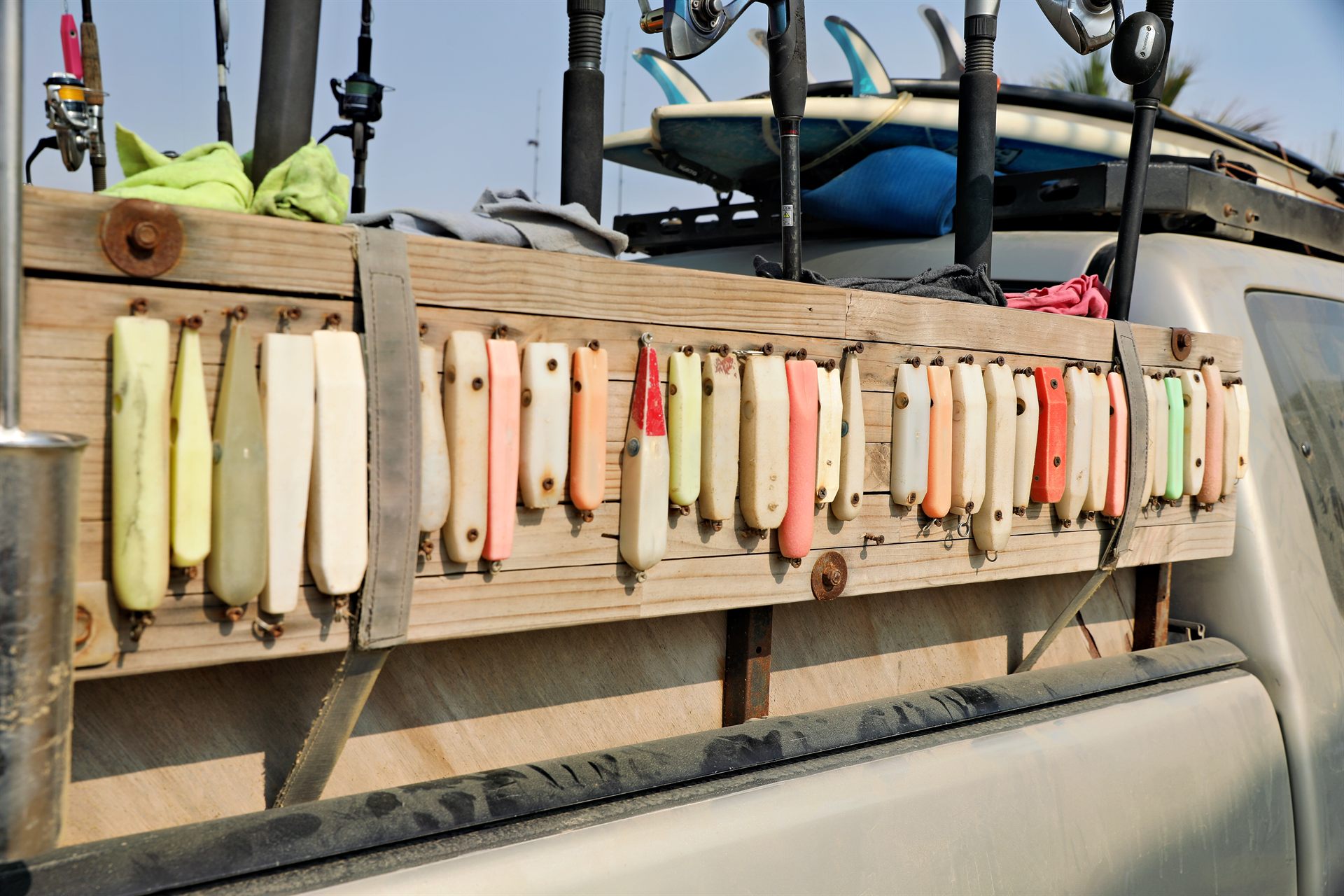
For lures, rely on plugs – stickbaits and poppers – as well as heavy metal spoons and soft lures on sufficiently heavy jig heads. You should largely do without treble hooks. Plan generously: how many lures a week of shad attacks eats up is regularly underestimated when packing. In case of doubt, however, the guide on site has a few spare lures at hand.
If you would also like to fish with natural bait for a trophy kob, bring a heavier surf rod with a matching reel. In preparation for the tour, you will receive detailed tour information from us, including our personal lure recommendations.
INTERESTING FACTS ABOUT SOUTHERN ANGOLA AND THE NAMIBE REGION
- The Namib is considered the oldest desert in the world – it has been continuously dry for millions of years.
- The Benguela Current off the coast is one of the strongest upwelling systems on earth: cold, nutrient-rich deep water rises to the surface and makes the region one of the most fish-rich marine areas in Africa.
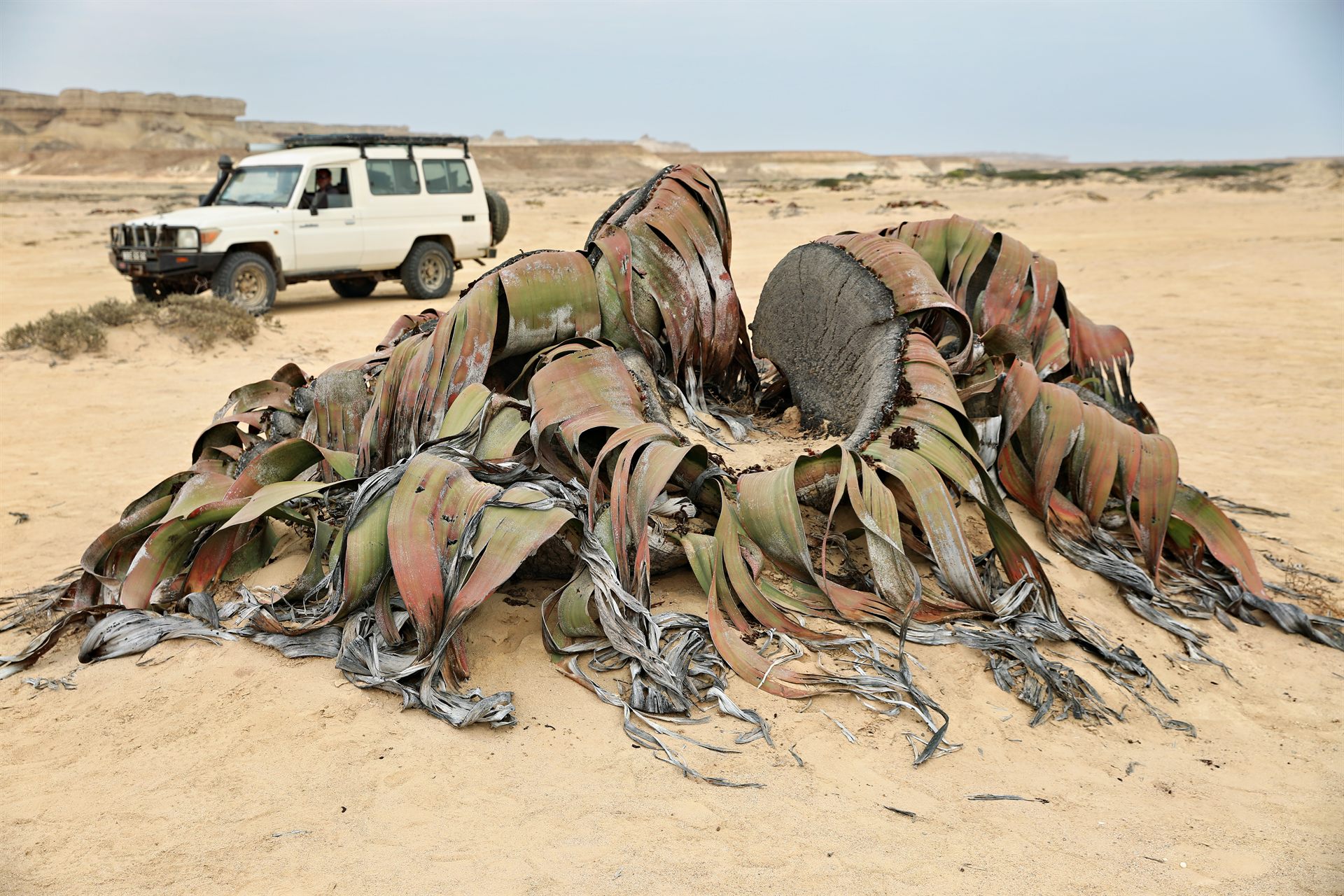
- The Namib is home to Welwitschia mirabilis, one of the most bizarre plants in the world. It grows only two leaves in its entire life and can live for more than a thousand years.
- The Ilha dos Tigres off the southern Angolan coast was a peninsula until 1962. Then the sea broke through the land connection – it has been an island ever since and a legendary destination for expedition travellers.
Iona National Park in Namibe Province is the largest national park in Angola. - Angola declared its independence from Portugal in 1975. Portuguese is still the official language today, alongside more than 40 other languages.
- The provincial capital Namibe long bore the name Moçâmedes – both names are still in use today.
- Despite the desert climate, it is rarely hot on the coast: the cold Benguela Current keeps temperatures moderate and, in the dry season, produces the characteristic coastal fog the Angolans call “Cacimbo”.
- The lodge takes its name from the flamingos that rest in the coastal lagoons – in impressive flocks when conditions are right.
- Where desert and ocean meet, an unusual wildlife emerges: alongside dolphins and whales you can see oryx antelope, jackals and, with a bit of luck, the shy brown hyena combing the beach for whatever washes ashore.
HOW YOU GET AROUND ON THE COAST
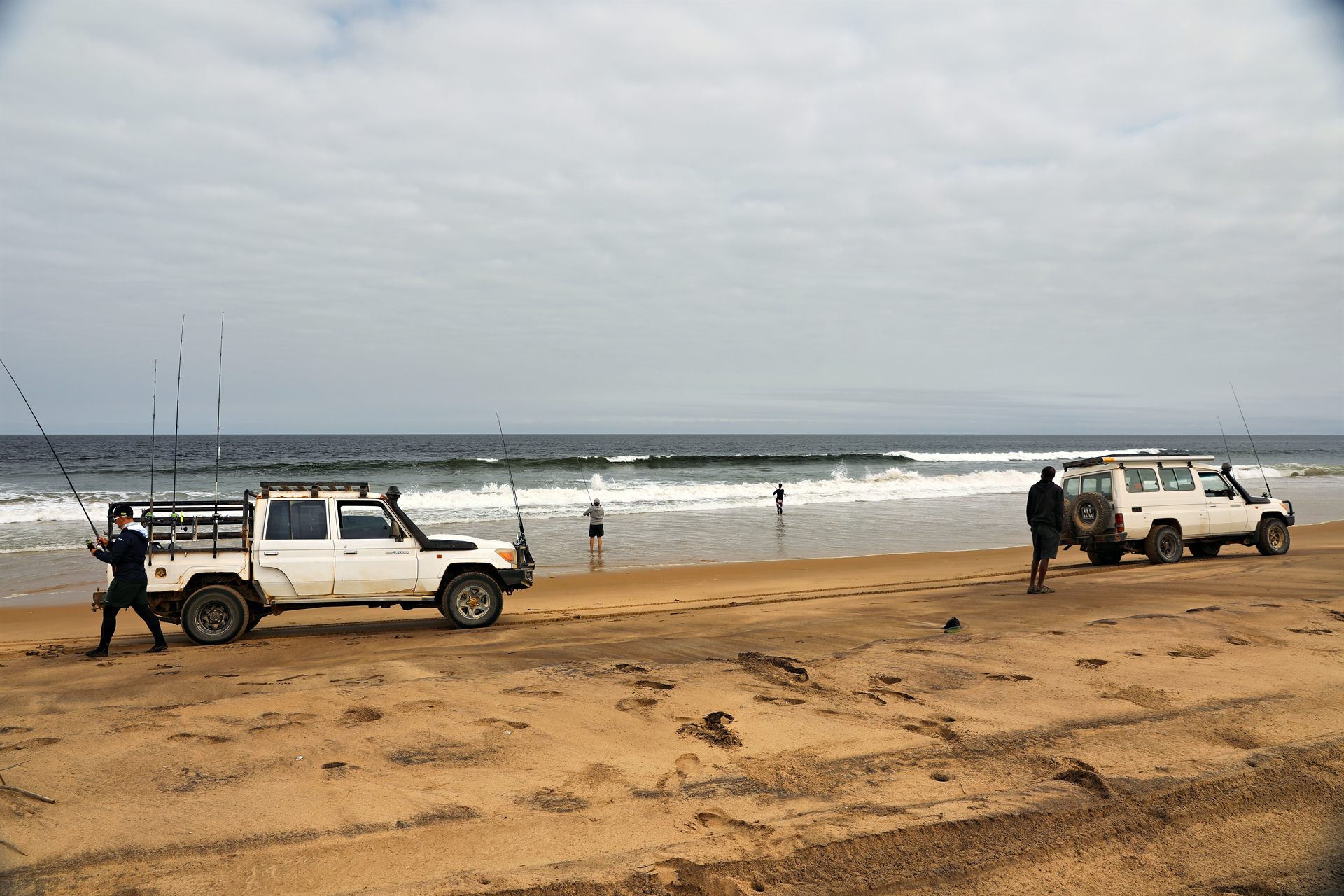
Unlike on our boat and mothership trips, at the Flamingo Lodge you travel by 4×4. The guides drive you across the beach to the spots that work best on that day, at that tide and in that swell – and those can be two completely different places in the morning and in the afternoon. This mobility is the great advantage of this fishery: if one stretch does not deliver, you simply drive on. With more than 70 kilometres of uninhabited coastline, you never run out of options.
Food, drinks and spare tackle are carried in the vehicle, so you can stay out all day without having to return to the lodge.
THE FLAMINGO LODGE – YOUR CAMP ON THE EDGE OF THE NAMIB
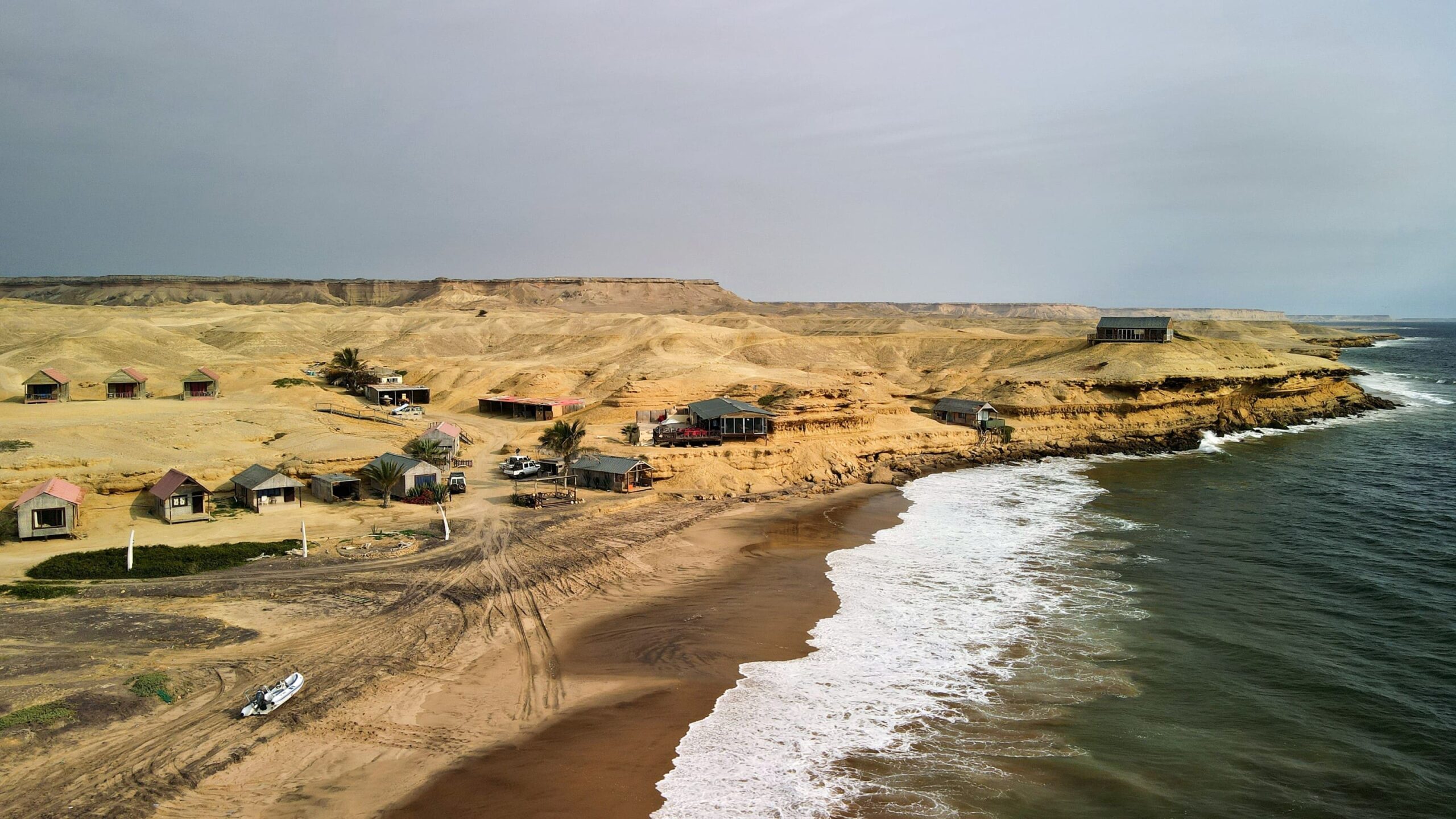
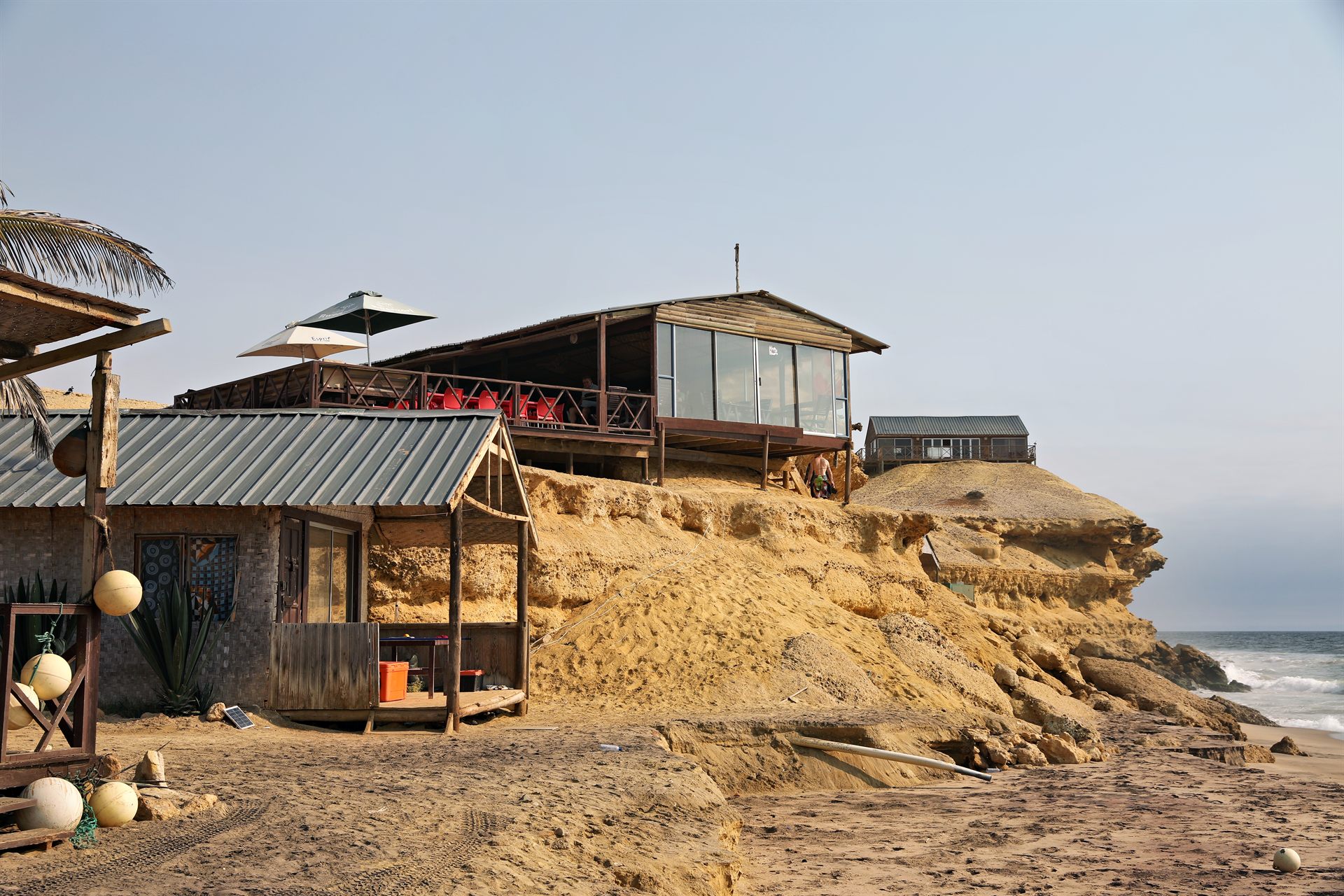
The lodge sits sheltered on low cliffs directly above the beach, close to the mouth of the dry Rio dos Flamingos. You are accommodated in comfortable bungalows with en-suite bathroom, shower and WC. There is also a restaurant and bar area where the day’s catches are discussed in the evening – the part of the trip that, in our experience, nobody wants to miss.
The lodge is run by a small team that has known this coast for years. Lodge manager Neil Gouws brings an impressive competition background: he represented the South African national team in 2002 and became South African champion in 2003 – a title he went on to defend for two years in a row. He first came to the Flamingo Lodge in 2007 and, after guiding stints in Angola and Mozambique, took it over in 2026. At his side is guide Dwayne Graham, likewise with a competition past and many years of experience at national championships. Ursula Gouws takes care of reservations and organisation and has known the lodge since its early days.
This combination – local guides at competition level and a fishery that hardly anyone fishes – is the real reason we added the Flamingo Lodge to our programme.
WHAT DOES YOUR FISHING HOLIDAY AT THE FLAMINGO LODGE COST?
Price: from EUR 2,990 (flights not included)
Included in the price:
– 7 days of guided fishing, maximum 5 anglers per guide
– 8 nights at the Flamingo Lodge in a shared double bungalow
– Each bungalow has its own bathroom, shower and WC
– Day trips or multi-day tours into the Namib Desert towards the mouth of the Kunene (border river with Namibia)
– Tent + camping equipment for overnight stays in the desert
– Full board (breakfast, lunch on the beach, dinner)
– Water, tea, coffee
– Airport ↔ lodge transfers
– Daily 4×4 drives to the fishing spots
– Laundry service
Not included in the price:
– International flights to Luanda/Angola
– Domestic flight to Namibe (Welwitschia Airport)
– Visa and entry formalities
– Soft drinks and alcoholic beverages (billed according to personal consumption)
– Travel insurance
– Tips + personal expenses
Further optional extras:
– Extension days at the lodge
– Excursion to the Ilha dos Tigres
– Guided 4×4 tours into the Namib and a visit to Iona National Park
– Combination with a trip to the Kwanza Lodge in northern Angola
As standard, we offer our tours with 7 days of fishing. Shorter or longer stays are of course possible. Just talk to us for individual planning and a personal quote!
BOOK YOUR ANGOLA FISHING HOLIDAY NOW & LOOK FORWARD TO A NEW ADVENTURE
You are only a cast away from your next adventure. If you have always wanted to fish a coastline where nobody but your own group stands for kilometres, if you want to experience the fight of a trophy kob from the surf or cast after a garrick that follows your lure right up to your feet – then the Flamingo Lodge is exactly the right address.
If you are still unsure or have questions, please get in touch. We look forward to creating an unforgettable fishing holiday in Angola for you!
Your Travel2Fish team
INQUIRY